
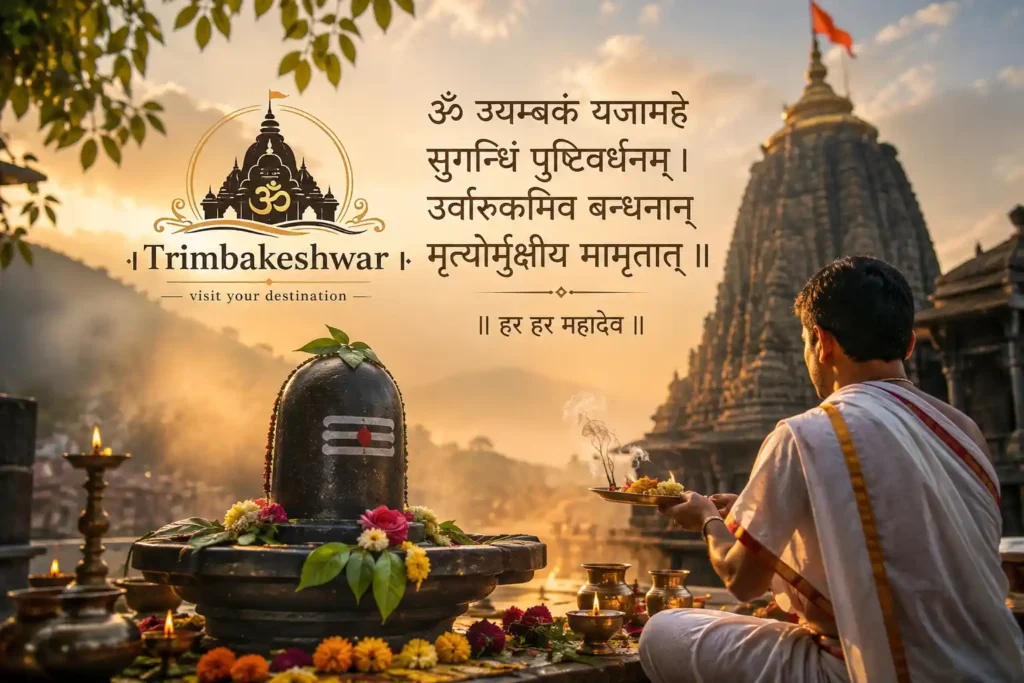
The Maha Mrityunjaya Mantra is one of the most sacred and powerful mantras dedicated to Lord Shiva. It is found in the Rig Veda (Mandala 7, Sukta 59, Verse 12) and is also known as the Tryambakam Mantra or the Death-Conquering Mantra. Devotees have recited this mantra for thousands of years while praying for good health, protection, inner peace, spiritual strength, and freedom from fear. The mantra is believed to invoke Lord Shiva’s blessings to overcome difficulties, illness, and negative energies while promoting courage and emotional stability. Although it is traditionally associated with healing and longevity, many devotees also chant it daily for mental clarity, meditation, and spiritual growth. The Maha Mrityunjaya Mantra meaning and benefits are deeply connected to surrendering one’s fears and seeking divine grace rather than asking for material gains. Whether recited at home, in a temple, or during a Maha Mrityunjaya Jaap at Trimbakeshwar, this timeless Vedic mantra continues to inspire millions of devotees across the world.
Maha Mrityunjaya Mantra (Original Sanskrit)
ॐ त्र्यम्बकं यजामहे
सुगन्धिं पुष्टिवर्धनम्।
उर्वारुकमिव बन्धनान्
मृत्योर्मुक्षीय मामृतात्॥
Transliteration
Om Tryambakam Yajamahe
Sugandhim Pushtivardhanam
Urvarukamiva Bandhanan
Mrityor Mukshiya Maamritat॥
Maha Mrityunjaya Mantra Meaning
The Maha Mrityunjaya Mantra meaning can be understood as a heartfelt prayer to Lord Shiva, requesting protection, healing, wisdom, and liberation from fear and suffering. The mantra compares human life to a ripe cucumber that naturally separates from its vine when the time is right. In the same way, devotees pray to be released from the bondage of fear, ignorance, and the cycle of suffering with divine grace. Rather than focusing solely on physical death, the mantra symbolizes freedom from emotional pain, attachment, anxiety, and spiritual ignorance. It encourages devotees to cultivate faith, inner strength, and acceptance while trusting Lord Shiva’s guidance throughout life’s journey. Many spiritual teachers explain that the mantra reminds us to embrace both life and death with courage, wisdom, and devotion. Its profound message makes it one of the most respected Vedic mantras for meditation, healing prayers, and spiritual practice across generations.
Word-by-Word Meaning of Maha Mrityunjaya Mantra
Sanskrit Word | Meaning |
Om | Universal sacred sound |
Tryambakam | The three-eyed Lord Shiva |
Yajamahe | We worship or adore |
Sugandhim | Fragrant; spreading divine grace |
Pushtivardhanam | The one who nourishes and strengthens life |
Urvarukamiva | Like a ripe cucumber |
Bandhanan | From worldly bondage and attachments |
Mrityor | From death or fear |
Mukshiya | Please liberate us |
Ma Amritat | Not from immortality or eternal bliss |
Spiritual Significance of the Maha Mrityunjaya Mantra
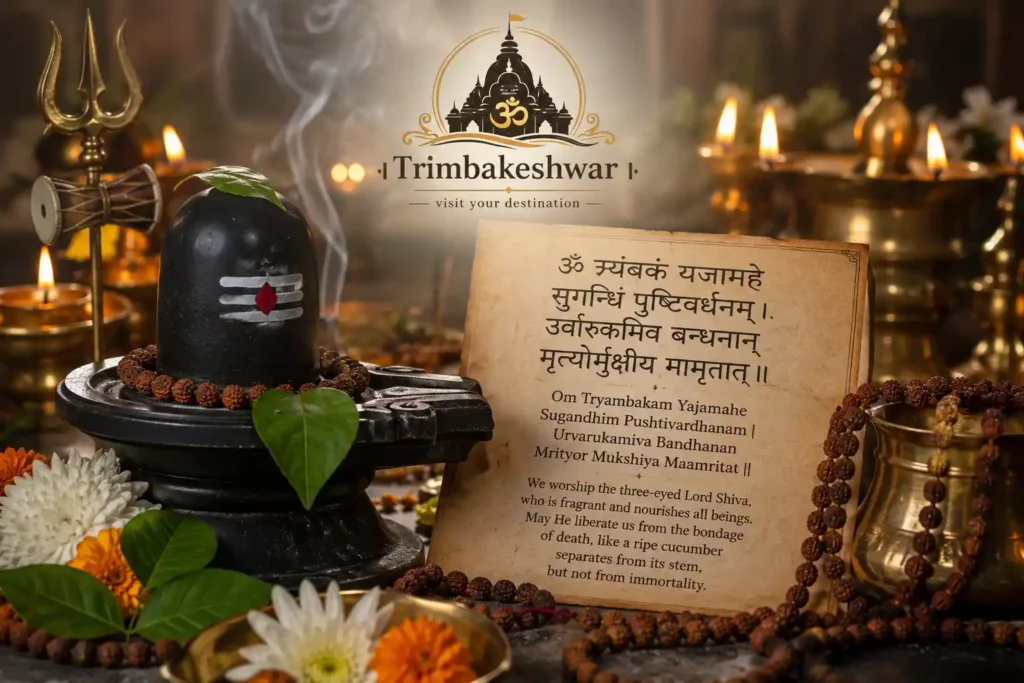
The Maha Mrityunjaya Mantra represents far more than a prayer for longevity. Spiritually, it teaches devotees to rise above fear, attachment, and ignorance while strengthening their connection with Lord Shiva. According to Hindu philosophy, true liberation comes from overcoming the fear of death and recognizing the eternal nature of the soul. Regular chanting of this mantra is believed to create a peaceful state of mind, improve concentration during meditation, and inspire positive thinking. Many devotees recite it during periods of uncertainty, illness, major life transitions, or while praying for the well-being of loved ones. It is also commonly chanted during Rudrabhishek, Maha Mrityunjaya Jaap, and other Shiva worship ceremonies at Trimbakeshwar Jyotirlinga. Whether practiced individually or in groups, the mantra helps cultivate faith, emotional resilience, and devotion, making it one of the most revered spiritual chants in Sanatan Dharma.
Word-by-Word Meaning of the Maha Mrityunjaya Mantra
The Maha Mrityunjaya Mantra, also known as the Tryambakam Mantra or Rudra Mantra, is one of the most sacred Vedic mantras dedicated to Lord Shiva. Found in the Rig Veda (7.59.12) and the Yajur Veda, this mantra is chanted for protection, healing, longevity, spiritual growth, and liberation from fear and suffering. While many devotees recite it daily for peace and well-being, understanding its deeper meaning makes the chanting even more powerful. Every word of this ancient Sanskrit mantra carries profound spiritual significance, describing Lord Shiva as the compassionate protector who frees devotees from pain, ignorance, and the cycle of birth and death. Unlike ordinary prayers that seek material gains, the Maha Mrityunjaya Mantra encourages inner transformation, courage, and surrender to divine grace. Whether you chant it during Maha Mrityunjaya Jaap, Rudrabhishek Puja, or daily meditation, knowing the word-by-word meaning helps you connect with its true essence. This section explains each Sanskrit word in simple language so devotees can understand not just what they are chanting, but why this mantra has been revered by saints and sages for thousands of years.
Maha Mrityunjaya Mantra (Sanskrit)
ॐ त्र्यम्बकं यजामहे सुगन्धिं पुष्टिवर्धनम्।
उर्वारुकमिव बन्धनान्मृत्योर्मुक्षीय मामृतात्॥
Om Tryambakam Yajamahe Sugandhim Pushtivardhanam
Urvarukamiva Bandhanan Mrityor Mukshiya Maamritat
Word-by-Word Meaning
Sanskrit Word | Meaning |
Om (ॐ) | The universal sound and source of all creation. |
Tryambakam (त्र्यम्बकम्) | The three-eyed Lord Shiva, representing wisdom, knowledge, and divine vision. |
Yajamahe (यजामहे) | We worship, honor, and meditate upon. |
Sugandhim (सुगन्धिम्) | The one whose divine presence spreads purity and positive energy like fragrance. |
Pushtivardhanam (पुष्टिवर्धनम्) | The nourisher who strengthens health, prosperity, and spiritual growth. |
Urvarukamiva (उर्वारुकमिव) | Like a ripe cucumber naturally separating from its vine. |
Bandhanan (बन्धनान्) | From all worldly attachments, suffering, and bondage. |
Mrityor (मृत्योः) | From death, fear, disease, and negativity. |
Mukshiya (मुक्षीय) | Please liberate or free us. |
Ma Amritat (मा अमृतात्) | Do not separate us from immortality, eternal bliss, and divine consciousness. |
Complete Meaning of the Mantra
The Maha Mrityunjaya Mantra is a heartfelt prayer to Lord Shiva seeking protection, healing, freedom from fear, and spiritual liberation. It compares human life to a ripe fruit that naturally separates from its stem, praying that just as the fruit is released effortlessly, devotees may also be freed from suffering, disease, fear, negative karma, and the cycle of birth and death while remaining connected to the eternal divine consciousness. This mantra symbolizes hope, inner strength, and complete surrender to Lord Shiva’s grace, making it one of the most powerful Vedic chants for physical, mental, and spiritual well-being.
Spiritual Benefits of Chanting the Maha Mrityunjaya Mantra
The Maha Mrityunjaya Mantra is much more than a sacred Sanskrit prayer—it is considered one of the most powerful Vedic mantras dedicated to Lord Shiva, the destroyer of fear, negativity, and ignorance. Revered in the Rig Veda and chanted by millions of devotees worldwide, this mantra is believed to create positive vibrations that promote physical healing, emotional stability, spiritual awakening, and inner peace. Unlike prayers focused only on material success, the Maha Mrityunjaya Mantra meaning and benefits extend beyond worldly desires, helping devotees overcome fear of death, illness, stress, and karmic obstacles while strengthening faith and devotion. Whether recited during Maha Mrityunjaya Jaap, Rudrabhishek Puja, meditation, or daily worship, this sacred mantra inspires courage, clarity, and divine protection. Regular chanting with sincerity is believed to purify the mind, balance emotions, and deepen one’s connection with Lord Shiva. Below are the most significant spiritual, mental, and physical benefits associated with this timeless mantra.
Key Benefits of Chanting the Maha Mrityunjaya Mantra
Benefit | Description |
Divine Protection | Shields devotees from negative energies, fear, and unseen obstacles through Lord Shiva’s blessings. |
Improves Mental Peace | Reduces stress, anxiety, emotional disturbances, and promotes inner calmness. |
Supports Physical Healing | Traditionally chanted for those recovering from illness, surgery, or health challenges. |
Promotes Longevity | Believed to bless devotees with a long, healthy, and prosperous life. |
Removes Fear of Death | Encourages acceptance, courage, and spiritual strength during difficult situations. |
Purifies Negative Karma | Helps reduce the effects of past karmic actions through sincere devotion and prayer. |
Enhances Meditation | Improves concentration, mindfulness, and spiritual awareness during meditation practices. |
Strengthens Faith | Deepens devotion to Lord Shiva and nurtures trust in divine guidance. |
Creates Positive Vibrations | The sacred sound vibrations purify the surrounding environment and promote harmony. |
Supports Spiritual Growth | Helps devotees move toward self-realization, wisdom, and ultimately liberation (Moksha). |
Why Devotees Chant the Maha Mrityunjaya Mantra
People recite the Maha Mrityunjaya Mantra for many different reasons depending on their spiritual needs and life circumstances. It is commonly chanted before important surgeries, during serious illnesses, for family well-being, during difficult planetary periods, and for protection while traveling. Many devotees also include it in their daily morning prayers to begin the day with positivity, courage, and divine blessings. During auspicious occasions such as Mahashivratri, Shravan month, Pradosh Vrat, or Rudrabhishek Puja, the mantra is often chanted 108, 1008, or even 1.25 lakh times as part of a Maha Mrityunjaya Jaap Anushthan. Spiritual teachers explain that while the mantra does not replace medical treatment or practical action, it strengthens mental resilience, inspires hope, and encourages complete surrender to Lord Shiva. With consistent chanting and genuine devotion, devotees experience greater emotional balance, increased confidence, and a profound sense of inner peace that supports every aspect of life.
How to Chant the Maha Mrityunjaya Mantra Correctly
Chanting the Maha Mrityunjaya Mantra with proper pronunciation, devotion, and consistency is considered more important than simply repeating the words. According to Vedic tradition, this sacred mantra invokes the blessings of Lord Shiva, promoting healing, protection, longevity, and spiritual growth. While anyone can chant the mantra regardless of age or gender, following certain guidelines enhances concentration and creates a peaceful spiritual atmosphere. Many devotees begin their practice after taking a bath, wearing clean clothes, and sitting in a quiet place facing east or north. Using a Rudraksha mala of 108 beads helps maintain focus and complete a full round of chanting. Although there are no rigid rules, chanting with sincerity, a calm mind, and clear pronunciation allows devotees to experience the deeper Maha Mrityunjaya Mantra meaning and benefits. Whether you recite it daily at home, during meditation, or as part of a Maha Mrityunjaya Jaap at Trimbakeshwar, regular practice strengthens faith and creates positive spiritual vibrations in your life.
Best Time to Chant the Maha Mrityunjaya Mantra
The mantra can be chanted at any time with devotion, but certain periods are considered especially auspicious in Hindu tradition.
- Brahma Muhurta (4:00 AM – 6:00 AM) is considered the most spiritually powerful time.
- Morning after bath for daily peace and positivity.
- Evening during sunset for mental calmness and family well-being.
- During Mahashivratri, Shravan month, Pradosh Vrat, and Mondays dedicated to Lord Shiva.
- Before medical treatment, surgery, travel, or important life decisions.
- During Rudrabhishek, Maha Mrityunjaya Jaap, or other Shiva pujas.
How Many Times Should You Chant?
The number of repetitions depends on your purpose and spiritual practice.
Purpose | Recommended Count |
Daily worship | 11 or 21 times |
Regular spiritual practice | 108 times |
Health and protection prayers | 108 or 1008 times |
Major religious rituals | 11,000 to 1,25,000 chants under a qualified priest’s guidance |
Step-by-Step Method to Chant the Mantra
- Take a bath and wear clean, comfortable clothes.
- Sit in a peaceful place facing East or North.
- Place an image or Shivling of Lord Shiva before you.
- Light a diya and incense if possible.
- Offer water, flowers, or Bilva (Bel) leaves.
- Close your eyes and focus on Lord Shiva.
- Chant the mantra slowly with proper pronunciation.
- Use a 108-bead Rudraksha mala to count repetitions.
- Conclude with a short prayer expressing gratitude.
Pronunciation Tips
Proper pronunciation helps preserve the mantra’s traditional sound and rhythm.
- Chant at a steady, comfortable pace.
- Pronounce Sanskrit words clearly without rushing.
- Focus on meaning rather than speed.
- Listen to authentic Vedic recitations if you are learning.
- Maintain a peaceful and devotional mindset throughout the practice.
Common Mistakes to Avoid
Many beginners worry about chanting perfectly, but sincerity matters most. Still, avoiding these common mistakes can improve your practice.
- Chanting too fast without understanding the words.
- Skipping pronunciation practice.
- Treating the mantra as a mechanical repetition.
- Chanting while distracted or multitasking.
- Inconsistency in daily practice.
- Ignoring the spiritual meaning behind the mantra.
Quick Reference Table
Aspect | Recommendation |
Best Direction | East or North |
Best Time | Brahma Muhurta or Morning |
Minimum Daily Count | 11 Times |
Ideal Daily Count | 108 Times |
Preferred Mala | Rudraksha Mala |
Dedicated Deity | Lord Shiva |
Most Auspicious Days | Monday, Mahashivratri, Shravan Month |
Suitable For | Everyone seeking peace, healing, protection, and spiritual growth |
By chanting the Maha Mrityunjaya Mantra regularly with faith, proper pronunciation, and devotion, devotees gradually develop greater inner peace, emotional stability, and a stronger connection with Lord Shiva. The true power of this mantra lies not only in repeating its sacred words but also in understanding its meaning and living with sincerity, compassion, and spiritual discipline.
Maha Mrityunjaya Jaap at Trimbakeshwar
The Maha Mrityunjaya Jaap at Trimbakeshwar is regarded as one of the most spiritually significant Shiva rituals in India. Trimbakeshwar, located near Nashik in Maharashtra, is home to one of the twelve sacred Jyotirlingas, making it a highly revered destination for devotees seeking Lord Shiva’s blessings. Every year, thousands of pilgrims visit the temple to perform Maha Mrityunjaya Jaap for health, peace, protection, family well-being, and spiritual progress. The chanting is traditionally performed by experienced Tamrapatradhari Pandits, who follow authentic Vedic procedures passed down through generations. The ritual generally begins with Ganesh Puja, followed by Sankalp, Rudra Path, continuous chanting of the Maha Mrityunjaya Mantra, Havan (sacred fire ritual), and concludes with Aarti and blessings. Many devotees choose Trimbakeshwar because of its powerful spiritual atmosphere, ancient Vedic traditions, and the sacred presence of Lord Shiva. While the mantra can certainly be chanted at home, participating in a properly conducted Maha Mrityunjaya Jaap at Trimbakeshwar is considered by many devotees to be a deeply meaningful spiritual experience.
Why Perform Maha Mrityunjaya Jaap at Trimbakeshwar?
Devotees from India and abroad choose Trimbakeshwar for this sacred ritual because of its religious importance and centuries-old Vedic traditions.
Key Reasons
- Home to one of the 12 Jyotirlingas of Lord Shiva
- Rituals performed by experienced Tamrapatradhari Pandits
- Authentic Vedic chanting following ancient scriptures
- Peaceful spiritual environment ideal for meditation
- Suitable for individual, family, and group Jaap ceremonies
- Popular destination for Rudrabhishek, Narayan Nagbali, Kaal Sarp Dosh Puja, and Maha Mrityunjaya Jaap
Who Should Perform Maha Mrityunjaya Jaap?
The Maha Mrityunjaya Jaap can be performed by anyone seeking Lord Shiva’s blessings. It is not limited to a specific age group or life situation.
Many devotees perform this Jaap for:
- Recovery from illness
- Better physical and mental health
- Protection from negative energies
- Family harmony
- Spiritual growth
- Relief during challenging life situations
- Peace of mind and emotional strength
- Special occasions such as birthdays or anniversaries
- Prayers for loved ones
What Happens During the Jaap?
Although the exact sequence may vary depending on tradition and the priest, a typical Maha Mrityunjaya Jaap includes the following rituals.
Ritual | Purpose |
Ganesh Puja | Invocation of Lord Ganesha for obstacle removal |
Sankalp | Devotee’s prayer and intention |
Kalash Sthapana | Establishing the sacred Kalash |
Rudra Abhishek | Worship of Lord Shiva |
Maha Mrityunjaya Mantra Chanting | Main Vedic recitation |
Havan | Sacred fire offering |
Aarti | Final worship and blessings |
Prasad Distribution | Completion of the ceremony |
How Long Does the Jaap Take?
The duration depends on the number of mantra repetitions and the type of ritual selected.
Jaap Type | Approximate Duration |
108 Chants | 1–2 Hours |
1008 Chants | Half Day |
Extended Jaap Anushthan | Full Day or Multiple Days |
Can NRIs Book Maha Mrityunjaya Jaap Online?
Yes. Many Tamrapatradhari Pandits in Trimbakeshwar provide online booking services for devotees living outside India. NRIs from the USA, UK, Canada, Australia, Singapore, Dubai, and other countries can consult with the priest, select an auspicious date, and confirm the booking through phone, WhatsApp, or email. Devotees usually need to share their name, birth details, purpose of the Jaap, and preferred date. Some priests also offer live video participation, allowing family members abroad to witness the ceremony remotely while maintaining the sanctity of the ritual.
Best Time to Perform Maha Mrityunjaya Jaap
Although this sacred Jaap may be performed throughout the year, certain occasions are considered especially auspicious.
- Mahashivratri
- Shravan Month
- Mondays dedicated to Lord Shiva
- Pradosh Vrat
- Masa Shivaratri
- Personal birthdays
- Wedding anniversaries
- Before major life events
- During health-related prayers
What is Maha Mrityunjaya Jaap at Trimbakeshwar?
Maha Mrityunjaya Jaap at Trimbakeshwar is a sacred Vedic ritual dedicated to Lord Shiva and performed by experienced Tamrapatradhari Pandits at the Trimbakeshwar Jyotirlinga. Devotees perform this Jaap to seek blessings for health, protection, peace, longevity, spiritual growth, and overall well-being through the continuous chanting of the Maha Mrityunjaya Mantra.
FAQ
1. What is the Maha Mrityunjaya Mantra and why is it so powerful?
The Maha Mrityunjaya Mantra is one of the most sacred mantras dedicated to Lord Shiva. It is mentioned in the Rig Veda and is believed to promote healing, inner strength, protection, and spiritual growth. Chanting it with devotion helps devotees overcome fear, negativity, and life’s challenges while seeking Lord Shiva’s divine blessings.
2. What is the meaning of the Maha Mrityunjaya Mantra?
The Maha Mrityunjaya Mantra meaning symbolizes liberation from fear, suffering, and the cycle of birth and death. Each word carries deep spiritual significance, praying to Lord Shiva for health, peace, longevity, and freedom from obstacles. It encourages spiritual awakening while strengthening faith and mental resilience.
3. What are the benefits of chanting the Maha Mrityunjaya Mantra?
Regular chanting of the Maha Mrityunjaya Mantra benefits devotees by promoting peace of mind, emotional balance, better concentration, spiritual protection, and positive energy. Many people also recite it during illness, difficult life situations, or before important events, believing it invokes Lord Shiva’s blessings for health, courage, and prosperity.
4. How many times should I chant the Maha Mrityunjaya Mantra?
Traditionally, devotees chant the Maha Mrityunjaya Mantra 108 times using a Rudraksha mala. Beginners may start with 11, 21, or 51 repetitions daily. Consistency and sincere devotion are considered more important than the number of chants for receiving the mantra’s spiritual and mental benefits.
5. What is the best time to chant the Maha Mrityunjaya Mantra?
The ideal time to chant the Maha Mrityunjaya Mantra is during Brahma Muhurta (before sunrise) or in the evening after sunset. Mondays, the holy month of Shravan, Mahashivratri, and Pradosh are especially auspicious. However, the mantra can be recited anytime with a pure mind and sincere devotion.
6. Can anyone chant the Maha Mrityunjaya Mantra?
Yes, anyone regardless of age, gender, or background can chant the Maha Mrityunjaya Mantra. There are no strict restrictions for sincere devotees. Chanting with faith, proper pronunciation, and a peaceful mindset is recommended to experience its spiritual, emotional, and psychological benefits.
7. Is Maha Mrityunjaya Jaap more effective than chanting the mantra individually?
Both personal chanting and Maha Mrityunjaya Jaap performed by experienced Vedic priests have their significance. Individual chanting strengthens personal devotion, while organized Jaap with Vedic rituals is often performed for health, family well-being, recovery, spiritual protection, and special religious occasions according to Hindu traditions.
8. Can I perform Maha Mrityunjaya Jaap at Trimbakeshwar?
Yes. Trimbakeshwar Temple is considered one of the most sacred places to perform Maha Mrityunjaya Jaap because it houses one of the twelve Jyotirlingas of Lord Shiva. Many devotees visit Trimbakeshwar to perform the ritual under the guidance of experienced Vedic and Tamrapatradhari Pandits.
9. What items are required for Maha Mrityunjaya Jaap?
Common items include Rudraksha mala, Shiva Lingam, Bilva leaves, pure water, milk, honey, curd, ghee, flowers, sandalwood paste, incense, fruits, and offerings. If the Jaap is arranged through a qualified priest at Trimbakeshwar, all required puja materials are generally provided as part of the ritual.
10. Can the Maha Mrityunjaya Mantra remove negative energy?
According to Hindu scriptures and traditional beliefs, the Maha Mrityunjaya Mantra helps create positive vibrations, reduce fear, improve inner peace, and strengthen spiritual confidence. While it is regarded as highly auspicious, it should be viewed as a devotional spiritual practice rather than a guaranteed solution to life’s challenges.