
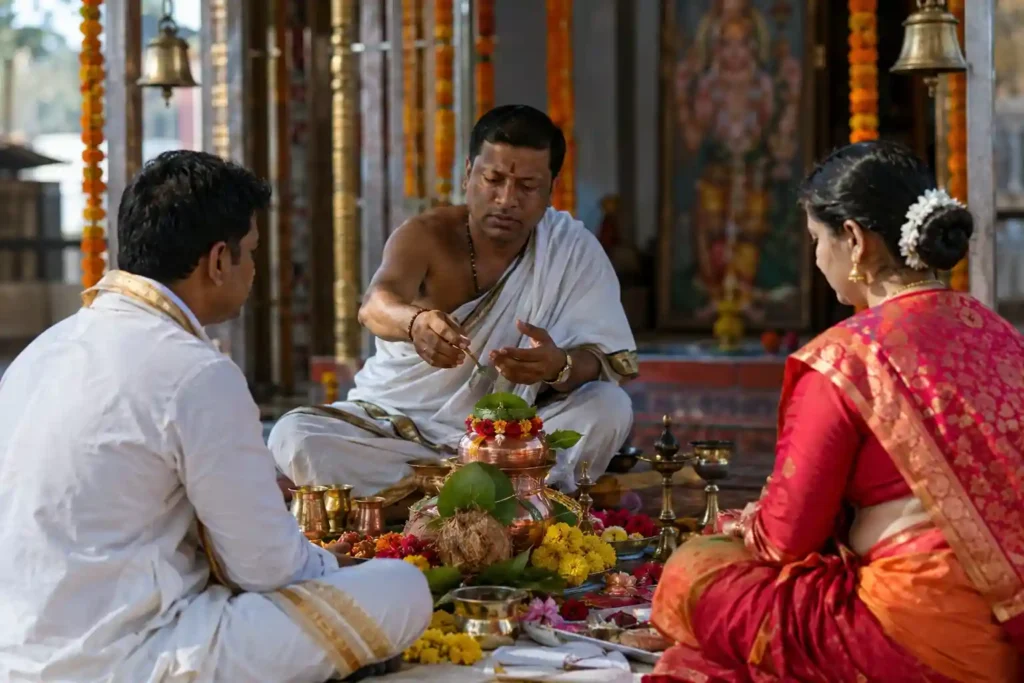
Marriage holds a special place in Hindu tradition. It is regarded as a sacred union that brings two individuals and their families together. In Vedic astrology, some planetary combinations are traditionally associated with challenges related to marriage. One such combination is Mangal Dosha, also known as Manglik Dosha.
In certain cases, a Vedic astrologer may recommend Kumbh Vivah Puja as a traditional spiritual remedy before marriage. The ceremony involves a symbolic marriage performed according to specific religious customs, with the method determined by the priest and the individual's horoscope.
Trimbakeshwar, near Nashik in Maharashtra, is an important destination for devotees seeking traditional Vedic rituals. People visit the area to perform various pujas under the guidance of experienced priests, including Tamrapatradhari Pandits.
This guide explains the meaning of Kumbh Vivah, its traditional significance, the steps involved in the ceremony, who may consider it, the expected duration, preparation, costs, and how to arrange a puja at Trimbakeshwar.
What Is Kumbh Vivah Puja?
Kumbh Vivah is a traditional Hindu ritual involving a symbolic marriage performed before an individual's actual wedding. It is commonly associated with certain interpretations of Mangal Dosha in Vedic astrology.
The word Kumbh refers to a sacred pot or vessel, while Vivah means marriage. Depending on regional customs, the horoscope, and the tradition followed by the officiating priest, the symbolic ceremony may involve a Kalash, a Peepal tree, a Banana tree, or an idol of Lord Vishnu.
The ritual is performed with Vedic mantras, prayers, and customary offerings. Devotees seek divine blessings and spiritual reassurance before beginning married life.
Kumbh Vivah is a religious ceremony, not a substitute for a legal marriage. Whether it is appropriate for a particular person should be discussed with a knowledgeable astrologer or priest rather than assumed from a general online horoscope result.
What Does Kumbh Vivah Mean in Hindu Tradition?
Kumbh Vivah represents a symbolic union performed as part of certain traditional astrological remedies. Its purpose is understood through religious beliefs concerning planetary influences, spiritual obligations, and preparation for marriage.
During the ceremony, prayers may be offered to Lord Ganesha, Lord Vishnu, Lord Shiva, and the Navagrahas. These prayers express the devotee's intention to seek blessings for peace, stability, and a harmonious married life.
The exact procedure is not identical everywhere. Some traditions prescribe a sacred pot, while others use a particular tree or deity's idol. The appropriate method depends on the tradition being followed and the guidance of the officiating priest.
For families who observe Vedic customs, the ceremony can also provide an opportunity to come together in prayer and approach an important life decision with faith and thoughtful preparation.
Why Is Kumbh Vivah Performed?
In traditional Vedic astrology, Mangal Dosha is associated with certain placements of Mars in a birth chart. Some astrologers believe that, depending on the complete horoscope, these placements may be relevant when examining marriage-related concerns.
Kumbh Vivah may be suggested when an astrologer considers a symbolic marriage appropriate as part of a traditional remedy.
People commonly seek guidance about this ritual when they have concerns such as:
- Delays in finding a suitable marriage partner.
- Repeatedly interrupted marriage discussions or engagements.
- Questions about Manglik Dosha in a birth chart.
- Family concerns regarding astrological compatibility.
- A recommendation from a Vedic astrologer to perform a traditional remedy before marriage.
These circumstances do not establish that Mangal Dosha is responsible for a person's difficulties. Marriage delays and relationship problems can have many practical, personal, and social causes. Astrological interpretations also vary between practitioners.
The purpose of seeking guidance is to understand the relevant tradition and decide whether the ritual is appropriate, rather than assuming that every difficulty requires a puja.
Who Should Perform Kumbh Vivah Puja?
Kumbh Vivah is generally considered in specific astrological circumstances, not as a compulsory ceremony for everyone who is described as Manglik.
Both men and women may be advised to perform the ritual, depending on the horoscope and the tradition followed by their astrologer or priest.
Before proceeding, consider the following steps:
- Consult a knowledgeable Vedic astrologer about your birth chart.
- Ask whether Mangal Dosha is present and how it is interpreted in your particular horoscope.
- Discuss whether Kumbh Vivah, Mangal Shanti, or another traditional practice is appropriate.
- Confirm the ritual method, preparations, duration, and total charges with the officiating priest.
A complete horoscope assessment may consider several planetary placements and traditional cancellation or balancing factors. A single online Manglik calculation may not provide enough information to make a decision.
Is Kumbh Vivah Necessary for Every Manglik Person?
No. Traditional astrological interpretations differ, and some practitioners consider the broader horoscope before recommending a remedy. In certain cases, an astrologer may conclude that Kumbh Vivah is unnecessary.
If both prospective partners are considered Manglik, some astrological traditions also assess how their charts interact before suggesting a remedy.
For this reason, avoid booking a ritual solely because a general website labels you Manglik. Ask for a clear explanation of the recommendation and make an informed decision without unnecessary fear or pressure.
Complete Kumbh Vivah Puja Vidhi: Step-by-Step Process
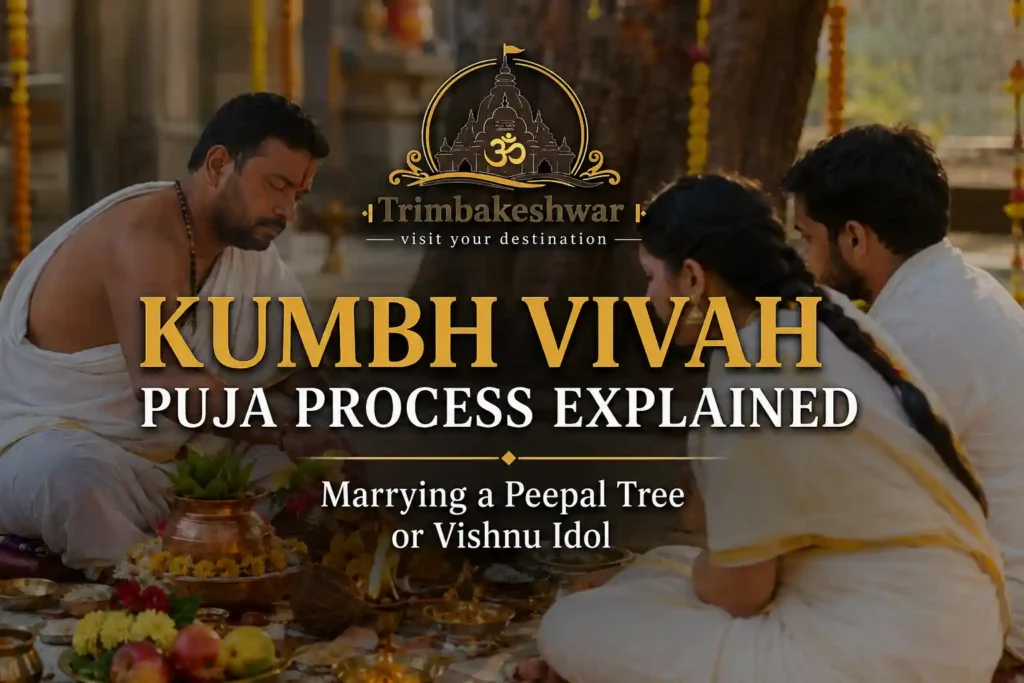
The procedure for Kumbh Vivah varies according to regional customs, the priest's tradition, and the method prescribed for the devotee. The following steps describe common elements that may be included in the ceremony. Confirm the exact procedure with the priest before your visit.
Step 1: Sankalp
The ceremony usually begins with Sankalp, a sacred declaration of the devotee's intention to perform the puja.
Under the priest's guidance, the devotee may provide their name, Gotra, and relevant birth details. The purpose of the ritual is stated, and prayers are offered for divine blessings.
Sankalp establishes the spiritual intention behind the ceremony and marks the beginning of the main rituals.
Step 2: Ganesh Puja and Kalash Sthapana
Lord Ganesha is worshipped at the beginning of many Hindu ceremonies because he is traditionally associated with auspicious beginnings and the removal of obstacles.
The priest may then perform Kalash Sthapana, in which a sacred pot is prepared and installed according to the ritual tradition. Water, leaves, a coconut, and other customary items may be used.
The Kalash represents auspiciousness and divine presence within the ceremony.
Step 3: Navagraha Puja and Mangal Shanti
Navagraha Puja involves prayers to the nine planetary deities recognised in Hindu astrological traditions. When the ritual is performed in connection with Mangal Dosha, special prayers for Mangal Shanti may also be included.
The priest chants prescribed mantras and offers customary items such as flowers, rice, sandalwood, and other ritual materials.
Devotees participate in these prayers to seek peace and blessings according to their religious beliefs. The specific mantras and offerings depend on the procedure followed by the officiating priest.
Step 4: The Symbolic Marriage Ceremony
The symbolic marriage is the central part of Kumbh Vivah. Depending on the prescribed tradition, the ceremony may involve a Kalash, a Peepal tree, a Banana tree, or an idol of Lord Vishnu.
The priest conducts the relevant rituals and recites the prescribed mantras. Flowers, sacred threads, and other customary offerings may be used.
The ceremony represents a symbolic religious union within the tradition. It should not be confused with a legal marriage or interpreted as a guarantee of future marital outcomes.
Step 5: Concluding Prayers and Blessings
After the symbolic ceremony, the priest completes the remaining prayers and customary offerings. The ritual may conclude with prayers to the deities invoked during the puja and blessings for the devotee.
The priest may explain any concluding customs or further observances, if applicable.
Before leaving, ask whether there are any specific post-puja instructions according to the tradition followed. Practices can vary, so it is best to receive guidance directly from the officiating priest.
Why Is a Peepal Tree Used in Kumbh Vivah?
The Peepal tree (Ficus religiosa) holds an important place in Hindu religious traditions. It is associated with sacredness, longevity, and spiritual significance, and is revered in different Hindu practices.
In some Kumbh Vivah traditions, the Peepal tree is used as the object of the symbolic marriage. The ritual follows a prescribed religious procedure and is performed under the guidance of a priest.
The choice of a tree is not universal. Depending on the horoscope and the tradition being followed, another symbolic object may be prescribed.
The ceremony is intended as a religious observance rather than a literal or legal marriage. Anyone considering this method should confirm its suitability with a qualified priest instead of assuming that the same procedure applies to every devotee.
Kumbh Vivah With a Peepal Tree or Lord Vishnu Idol: Which Is Appropriate?
There is no single method that can be declared universally superior across all Kumbh Vivah traditions. The prescribed method depends on the relevant religious custom and the guidance of the officiating priest.
| Aspect | Peepal Tree | Lord Vishnu Idol |
|---|---|---|
| Religious significance | A sacred tree revered in Hindu traditions | Worship of Lord Vishnu |
| Traditional symbolism | Sacredness, stability, and longevity | Preservation, protection, and divine blessings |
| Method | Symbolic ceremony following the prescribed tradition | Symbolic ceremony following the prescribed tradition |
| Selection | Based on the applicable ritual tradition and priest's guidance | Based on the applicable ritual tradition and priest's guidance |
A Kalash or another prescribed symbolic object may also be used in some traditions.
If you plan to perform Kumbh Vivah at Trimbakeshwar, ask the officiating priest which method is appropriate for your circumstances and what the ceremony includes. This is more useful than choosing a method based on unsupported claims that one option is always more effective.
Kumbh Vivah Puja at Trimbakeshwar
Trimbakeshwar, located near Nashik in Maharashtra, is a significant pilgrimage destination associated with Lord Shiva and the Trimbakeshwar Jyotirlinga.
Devotees visit the area for different religious ceremonies, including rituals connected with traditional Vedic practices. Families considering Kumbh Vivah may seek guidance from Tamrapatradhari Pandits familiar with the area's ritual customs.
Before making arrangements, confirm the details directly with the priest or authorised service provider. Ask about the method prescribed for your horoscope, the rituals included, the materials required, the duration, and the complete cost.
Do not assume that every priest or booking service follows an identical procedure. Confirming these details in advance helps you understand the ceremony and prepare for your visit.
How Long Does Kumbh Vivah Puja Take?
The duration depends on the ritual procedure, the priest's tradition, and the ceremonies included in the booking. Allow approximately 2–4 hours as a planning estimate, but confirm the expected timing before travelling.
You should also allow additional time for arrival, preliminary discussions, preparation of ritual materials, and any local travel arrangements.
If you are travelling from another city, avoid planning your return journey too tightly around the estimated puja duration. Confirm the reporting time and expected completion time with the priest.
What Should You Bring for Kumbh Vivah Puja?
The items required depend on the specific procedure. Some priests arrange the puja materials, while others ask devotees to bring certain items.
Use this checklist as a starting point and confirm the final requirements before your visit.
| Item | Why it may be needed |
|---|---|
| Birth details or Janma Kundali | To discuss the horoscope and prescribed ritual |
| Government-issued ID | If requested for booking or identification |
| Clean traditional clothing | For participation in the ceremony |
| Flowers, fruits, or coconut | Traditional offerings, if required |
| Betel leaves and other puja items | Depending on the prescribed procedure |
| Dakshina | Priest's customary honorarium, as agreed |
| Booking confirmation | To verify the scheduled time and arrangements |
| Personal medicines | If required during travel |
You do not necessarily need to purchase every item yourself. Ask the priest what is included in the booking so you can avoid duplicate purchases.
Traditional Benefits and Spiritual Significance of Kumbh Vivah
Kumbh Vivah is performed within certain Hindu astrological traditions as a symbolic remedy before marriage. Devotees may value the ceremony for its religious significance, the opportunity to pray, and the reassurance they find in observing family customs.
Traditional beliefs associated with the ritual include:
- Seeking blessings before beginning married life.
- Praying for harmony and stability in a future relationship.
- Expressing devotion to Lord Vishnu, Lord Shiva, Lord Ganesha, and the Navagrahas.
- Finding spiritual reassurance through prayer and customary observances.
- Continuing family and regional religious traditions.
These are matters of faith and traditional interpretation, not guaranteed outcomes. There is no reliable basis for promising that Kumbh Vivah will ensure marriage, prevent relationship difficulties, or change a person's future.
A healthy marriage also depends on mutual respect, communication, compatibility, trust, and shared responsibility. Religious practices can be meaningful to those who follow them, while practical decisions remain important.
Kumbh Vivah Puja Cost at Trimbakeshwar
The cost of Kumbh Vivah varies depending on the priest or service provider, the ritual procedure, the materials included, and any additional ceremonies.
There is no single price that applies to every booking. Rather than relying on an unverified online amount, request a current quotation before confirming your date.
Ask the service provider:
- What rituals are included in the quoted price?
- Are the priest's fees and puja materials included?
- Is horoscope consultation included or charged separately?
- Are any additional ceremonies optional?
- Are there extra charges for travel, accommodation, or other arrangements?
- What is the cancellation or rescheduling policy?
Choose a service based on clear information about the ceremony and its cost. Be cautious of claims that an expensive package guarantees a successful marriage or removes every astrological problem.
How to Book Kumbh Vivah Puja at Trimbakeshwar
Planning in advance can help you coordinate the puja, travel, and accommodation. The following steps can help you make an informed booking.
- Contact a priest or authorised service provider. Ask whether they conduct Kumbh Vivah and explain their ritual procedure.
- Share the required birth details. Provide the information requested for horoscope assessment, if applicable.
- Discuss the recommended ritual. Ask why it is being suggested and whether another traditional practice may be appropriate.
- Confirm the date and timing. Check the proposed muhurat and the expected duration.
- Request a complete price breakdown. Confirm the priest's fee, materials, and any additional charges.
- Finalise your booking. Obtain confirmation of the date, time, location, and included services.
- Prepare for your visit. Follow the priest's instructions regarding clothing, materials, arrival time, and other customary requirements.
If you are travelling from outside Nashik, arrange transport and accommodation separately unless they are explicitly included in the service.
Frequently Asked Questions About Kumbh Vivah Puja
1. What is Kumbh Vivah Puja?
Kumbh Vivah is a traditional Hindu ritual involving a symbolic marriage performed before an actual wedding in certain astrological circumstances. It is commonly associated with Mangal Dosha and is conducted according to the customs prescribed by the officiating priest.
2. Who should perform Kumbh Vivah?
It may be considered by men or women when recommended under a particular Vedic astrological tradition. A detailed horoscope assessment and consultation with a knowledgeable astrologer or priest can help determine whether the ritual is appropriate.
3. Is Kumbh Vivah compulsory for every Manglik person?
No. Not every person identified as Manglik is advised to perform Kumbh Vivah. Astrological interpretations vary, and practitioners may examine the complete horoscope before recommending a traditional remedy.
4. Why is the Peepal tree used in Kumbh Vivah?
The Peepal tree is revered in Hindu traditions and is associated with sacredness and spiritual significance. Some traditions prescribe a symbolic marriage with this tree, while others use a Kalash, Banana tree, or Lord Vishnu idol.
5. Can Kumbh Vivah be performed with a Lord Vishnu idol?
Yes, a symbolic ceremony involving a Lord Vishnu idol is followed in some traditions. The appropriate method depends on the ritual tradition and the guidance of the officiating priest.
6. Is Kumbh Vivah a legal marriage?
No. Kumbh Vivah is a symbolic religious ceremony and is not, by itself, a legal or social marriage between two people.
7. How long does Kumbh Vivah Puja take?
Allow approximately 2–4 hours as a general planning estimate. The actual duration depends on the procedure and the rituals included, so confirm the schedule with the priest.
8. What is the cost of Kumbh Vivah at Trimbakeshwar?
The price varies according to the priest, the ritual procedure, the materials supplied, and additional services. Contact the service provider for current charges and a written or clearly explained list of inclusions.
9. What documents or materials should I bring?
You may need your birth details or horoscope, identification if requested, clean traditional clothing, and any items specified by the priest. Confirm which puja materials are included before purchasing anything.
10. Can Kumbh Vivah guarantee a successful marriage?
No religious ceremony can guarantee a particular marriage outcome. Kumbh Vivah is a traditional spiritual practice, and its perceived benefits are matters of religious belief. A healthy relationship also depends on compatibility, communication, mutual respect, and shared decisions.
11. Can I book Kumbh Vivah Puja in advance?
You can ask the priest or authorised service provider about advance booking, available dates, the recommended muhurat, and the booking requirements. Confirm all arrangements before travelling to Trimbakeshwar.
12. Why consult Tamrapatradhari Pandits at Trimbakeshwar?
Devotees may consult Tamrapatradhari Pandits for guidance on traditional Vedic rituals in the Trimbakeshwar area. Before booking, verify the priest's experience, the procedure followed, the services included, and the total charges.
Conclusion
Kumbh Vivah is a traditional Hindu ritual that some families consider before marriage when a Vedic astrologer recommends it in connection with Mangal Dosha. The ceremony may involve a Kalash, Peepal tree, Banana tree, or Lord Vishnu idol, depending on the applicable tradition.
If you are considering Kumbh Vivah Puja at Trimbakeshwar, begin by understanding the ritual, discussing your circumstances with a knowledgeable priest, and confirming the procedure, date, duration, and cost before booking.
Approach the ceremony with respect for your religious beliefs and without fear of guaranteed negative consequences if you do not perform it. Faith and traditional observances can be personally meaningful, while informed decisions, mutual understanding, and personal responsibility remain important foundations for married life.
Book Kumbh Vivah Puja