
Marriage is considered one of the most sacred sixteen Hindu Sanskars, symbolizing not just the union of two individuals but also the coming together of two families and destinies. However, according to Vedic astrology, certain planetary combinations in a person’s birth chart can create obstacles in marriage. One of the most discussed among these is Mangal Dosha (Manglik Dosha), which is believed to cause delayed marriages, broken engagements, misunderstandings between partners, or difficulties in married life. To reduce these astrological effects, learned Vedic scholars often recommend Kumbh Vivah Puja, a traditional ritual performed before the actual marriage. This ceremony is commonly conducted by experienced Tamrapatradhari Pandits at Trimbakeshwar, one of India’s most respected centers for Vedic rituals. In this guide, you’ll learn the complete Kumbh Vivah Puja process explained, why some people are ritually married to a Peepal tree or Lord Vishnu idol, who should perform this puja, its spiritual significance, benefits, and what to expect if you plan to perform it at Trimbakeshwar.
What is Kumbh Vivah Puja?
Kumbh Vivah Puja is a traditional Vedic ritual performed to reduce the effects of Mangal Dosha (Manglik Dosha) before a person’s actual marriage. The word “Kumbh” means a sacred pot (Kalash), although depending on regional traditions and astrological guidance, the symbolic marriage may also be performed with a Peepal tree, Banana tree, or an idol of Lord Vishnu. The purpose of this ritual is not to replace a real marriage but to symbolically neutralize certain astrological combinations that are believed to affect marital harmony. According to Hindu beliefs, after the symbolic marriage is completed with proper Vedic mantras and rituals, the individual becomes spiritually prepared for a successful human marriage. The puja includes Ganesh Pujan, Sankalp, Navagraha Puja, Mangal Shanti, Kalash Sthapana, and the symbolic marriage ceremony, followed by prayers seeking blessings from Lord Shiva, Lord Vishnu, and the Navagrahas. This sacred ritual has been performed for centuries and continues to be recommended by knowledgeable Vedic astrologers in suitable cases.
What Does “Kumbh Vivah” Mean?
The term Kumbh Vivah comes from two Sanskrit words: “Kumbh,” meaning a sacred vessel or symbolic object, and “Vivah,” meaning marriage. In Hindu traditions, the ritual represents a symbolic marriage performed before the actual wedding to reduce the influence of specific planetary doshas. While many people popularly associate Kumbh Vivah with marrying a Peepal tree or Lord Vishnu idol, the exact procedure depends on the horoscope and the traditions followed by the officiating priest. The symbolic marriage signifies the completion of karmic obligations associated with Mangal Dosha, after which the person proceeds toward their actual marriage with renewed spiritual confidence. Importantly, this ritual should always be performed under the guidance of qualified Tamrapatradhari Pandits who understand Vedic scriptures and can recommend the appropriate method based on the individual’s birth chart rather than following a one-size-fits-all approach.
Spiritual Significance of Kumbh Vivah
Beyond astrology, Kumbh Vivah is deeply rooted in faith, symbolism, and spiritual purification. Hindu philosophy teaches that rituals performed with sincere devotion, proper Vedic chanting, and guidance from learned priests help cultivate inner peace, positive intention, and spiritual discipline. The symbolic marriage represents leaving behind obstacles and beginning a new phase of life with divine blessings. During the ceremony, devotees pray to Lord Vishnu, Lord Shiva, Goddess Parvati, Lord Ganesha, and the Navagrahas for harmony, prosperity, and a stable married life. Many families choose to perform the ritual at Trimbakeshwar Jyotirlinga, believing that the sacred atmosphere, ancient traditions, and experienced Tamrapatradhari Pandits contribute to a spiritually meaningful experience. While beliefs about astrological remedies vary among individuals, Kumbh Vivah remains an important cultural and religious practice for many devotees who wish to observe traditional Vedic customs before marriage.
Why is Kumbh Vivah Performed?
Many people first hear about Kumbh Vivah Puja only after consulting an astrologer regarding delays or difficulties in marriage. According to traditional Vedic astrology, certain placements of Mars (Mangal) in the birth chart may create what is commonly known as Mangal Dosha or Manglik Dosha. Some astrologers believe that, depending on the overall horoscope, these planetary combinations can contribute to delayed marriages, repeated misunderstandings in relationships, broken engagements, or challenges in married life. In such cases, Kumbh Vivah Puja is recommended as a symbolic Vedic remedy before the actual marriage. The ritual is performed with proper Vedic mantras, sacred offerings, and prayers seeking divine blessings from Lord Vishnu, Lord Shiva, and the Navagrahas. At Trimbakeshwar, experienced Tamrapatradhari Pandits carefully study the horoscope before recommending any puja, ensuring that the ritual is performed only when considered appropriate according to traditional practices rather than as a universal solution for every individual.
Common Reasons People Perform Kumbh Vivah Puja
Although every horoscope is unique, several common situations lead families to consult an astrologer about Kumbh Vivah Puja. One of the most frequent reasons is continuous delay in marriage, even after receiving suitable proposals. Some individuals experience repeated engagement cancellations or unexpected obstacles that prevent marriage from progressing. Others may notice recurring conflicts in relationships without a clear explanation. Traditional Vedic astrology associates some of these situations with the influence of Mangal Dosha, depending on the complete birth chart rather than Mars alone. Families may also seek spiritual guidance after repeated disappointments, hoping to begin married life with positive blessings and confidence. It is important to understand that these beliefs are rooted in religious and cultural traditions and should be considered alongside practical communication, mutual compatibility, and informed decision-making. Kumbh Vivah is viewed by many devotees as a sacred spiritual practice that complements faith rather than replacing personal responsibility or professional advice.
Signs That May Lead an Astrologer to Recommend Kumbh Vivah
The recommendation for Kumbh Vivah Puja is based on a detailed horoscope analysis rather than a single symptom. Traditional astrologers generally examine multiple planetary positions, the strength of Mars, marriage-related houses, planetary aspects, and overall horoscope balance before suggesting this ritual. Some commonly discussed situations include:
- Delayed marriage despite repeated proposals.
- Multiple broken engagements.
- Recurring misunderstandings in relationships.
- Strong Manglik Dosha in the birth chart.
- Concerns about marital harmony based on horoscope analysis.
- Advice from a qualified Vedic astrologer after detailed consultation.
- Need for Mangal Shanti before marriage.
- Family tradition of performing Vedic remedies before marriage.
It is important to remember that not every Manglik person requires Kumbh Vivah. Many horoscopes contain cancellation yogas, balancing planetary combinations, or other factors that reduce or nullify the effects of Mangal Dosha. Therefore, a proper horoscope reading by an experienced astrologer is essential before deciding to perform the ritual.
Who Should Perform Kumbh Vivah Puja?
Kumbh Vivah Puja is not intended for everyone. Traditionally, it is recommended only when a qualified Vedic astrologer concludes that the horoscope contains specific combinations where this ritual may be beneficial according to scriptural traditions. Both men and women can perform Kumbh Vivah if their horoscope indicates the need for the remedy. The decision depends on the complete birth chart rather than gender, age, or social status. At Trimbakeshwar, Tamrapatradhari Pandits generally review the date of birth, time of birth, and place of birth before advising devotees about the appropriate puja. This personalized approach helps ensure that rituals are performed according to authentic Vedic principles instead of following generalized assumptions. Seeking proper guidance before booking the puja helps families understand whether Kumbh Vivah, Mangal Shanti, or another Vedic remedy is more suitable for their specific horoscope.
When is Kumbh Vivah Not Required?
There is a common misconception that every person with Mangal Dosha must perform Kumbh Vivah before marriage. However, traditional Vedic astrology does not support such a blanket approach. Several horoscope combinations are believed to reduce or cancel the effects of Mangal Dosha, and in such cases the ritual may not be necessary. Similarly, if both prospective partners have compatible Manglik combinations, many astrologers consider the dosha balanced. This is why relying solely on online Manglik calculators or generalized advice can be misleading. A detailed horoscope analysis by an experienced astrologer is the most reliable way to determine whether Kumbh Vivah Puja is appropriate. Making an informed decision based on authentic Vedic guidance helps preserve the true spiritual significance of the ritual and prevents unnecessary ceremonies.
Complete Kumbh Vivah Puja Process Explained
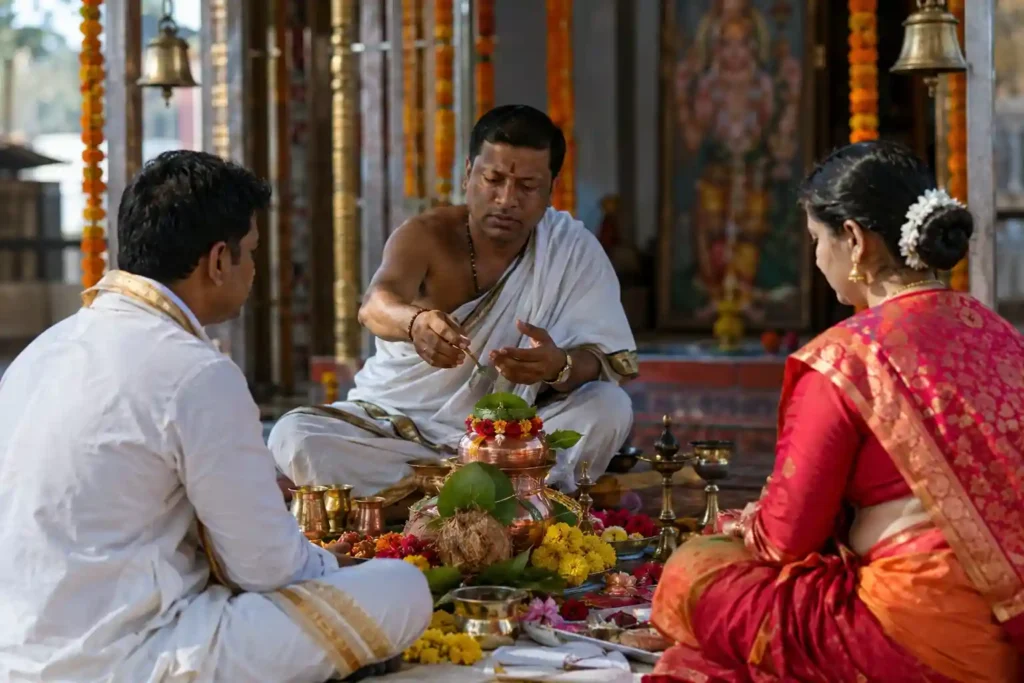
The Kumbh Vivah Puja process is performed according to traditional Vedic scriptures under the guidance of experienced Tamrapatradhari Pandits. Although the exact procedure may vary depending on the individual’s horoscope and local traditions, the core rituals remain largely the same. The ceremony is conducted with devotion, proper Vedic chanting, and strict adherence to religious customs. Every step has symbolic meaning, representing the removal of obstacles and the beginning of a spiritually positive phase before marriage. At Trimbakeshwar, the puja is generally performed in a peaceful temple environment where devotees participate in every ritual with sincerity. The ceremony includes purification rituals, Ganesh worship, Navagraha prayers, Mangal Shanti, symbolic marriage, and concluding blessings. Rather than being a mere formality, each ritual is intended to invoke divine grace and promote spiritual harmony before entering married life.
Step 1: Sankalp (Sacred Resolution)
The puja begins with Sankalp, the sacred vow that establishes the purpose of the ceremony. The devotee, guided by the priest, sits before the sacred fire and Kalash while reciting Vedic mantras. During Sankalp, the devotee states their name, family lineage (Gotra), birth details, and intention to perform Kumbh Vivah Puja for the peaceful resolution of Mangal Dosha and for blessings of a harmonious married life. Holy water from sacred rivers is invoked symbolically, and prayers are offered to Lord Ganesha to remove obstacles from the ritual. This step is spiritually important because it marks the devotee’s conscious commitment to the ceremony with faith and sincerity. According to Vedic traditions, every major puja begins with Sankalp, as it aligns the devotee’s intention with divine blessings before the remaining rituals commence.
Step 2: Ganesh Puja and Kalash Sthapana
After Sankalp, the priest performs Ganesh Puja, seeking the blessings of Lord Ganesha, who is revered as the remover of obstacles and the deity of auspicious beginnings. Flowers, fruits, turmeric, kumkum, and sacred offerings are presented while Vedic hymns are chanted. Following this, Kalash Sthapana is performed by installing a sacred pot filled with holy water, mango leaves, coconut, and other auspicious items. The Kalash represents divine energy, purity, and prosperity. Throughout the ceremony, it serves as a symbolic presence of various deities invited to bless the ritual. This stage creates a spiritually purified environment and prepares the devotee for the more significant rituals that follow. The peaceful chanting of Vedic mantras and disciplined ritual process help establish an atmosphere of devotion and positive spiritual energy.
Step 3: Navagraha Puja and Mangal Shanti
The next stage involves Navagraha Puja, during which prayers are offered to the nine planetary deities (Navagrahas), including Mars (Mangal). Since Kumbh Vivah is traditionally associated with remedies for Mangal Dosha, special emphasis is placed on Mangal Shanti. The priest chants specific Vedic mantras while making offerings such as flowers, rice, sandalwood, betel leaves, sesame seeds, and clarified butter (ghee). These prayers seek divine blessings for balance, harmony, and positive planetary influences. The purpose of this ritual is not to change destiny but to perform a traditional act of devotion that many believers feel brings peace, confidence, and spiritual support. Families often consider this one of the most meaningful parts of the ceremony because it invokes blessings for a successful and harmonious married life according to ancient Vedic customs.
Step 4: Symbolic Kumbh Vivah Ceremony
The central ritual of the puja is the symbolic marriage ceremony, where the devotee is ceremonially united with the object prescribed according to Vedic tradition—such as a sacred Kalash (Kumbh), Peepal tree, Banana tree, or Lord Vishnu idol, depending on the horoscope and the priest’s guidance. The ceremony follows many of the customs observed in a traditional Hindu marriage, including the chanting of sacred mantras, tying of the sacred thread, offering flowers, and performing symbolic rituals before the deity. This symbolic marriage is believed, in traditional practice, to fulfill certain karmic obligations associated with Mangal Dosha before the person’s actual marriage. The ritual is conducted with complete respect and devotion, emphasizing spiritual symbolism rather than literal marriage. Experienced Tamrapatradhari Pandits ensure that every step follows authentic Vedic procedures and local traditions.
Why is a Peepal Tree Used in Kumbh Vivah?
One of the most frequently asked questions about Kumbh Vivah Puja is why the symbolic marriage is sometimes performed with a Peepal tree instead of another person. In Hindu traditions, the Peepal tree (Ficus religiosa) is regarded as one of the most sacred trees and is believed to symbolize divine presence, longevity, stability, and spiritual growth. Various Hindu scriptures associate the Peepal tree with Lord Vishnu, while it is also revered by devotees of Lord Shiva and Lord Brahma, making it a powerful symbol of the Hindu Trinity. During Kumbh Vivah, the symbolic marriage with the Peepal tree represents the completion of specific karmic obligations before the devotee enters into their actual marriage. It is important to understand that this is a religious and symbolic ritual, not a legal or social marriage. The ceremony is performed with Vedic mantras under the guidance of Tamrapatradhari Pandits, who follow traditional procedures preserved for generations at Trimbakeshwar. The ritual emphasizes spiritual purification, divine blessings, and the devotee’s intention to begin married life with positivity, faith, and harmony.
Peepal Tree vs Lord Vishnu Idol – Which is Better?
Many devotees ask whether marrying a Peepal tree or a Lord Vishnu idol is considered more effective. According to traditional Vedic practice, there is no universally superior option. The appropriate method depends on the individual’s horoscope, the recommendations of the officiating priest, and the specific traditions followed by the temple. Both methods are considered sacred and spiritually meaningful when performed correctly.
| Aspect | Peepal Tree | Lord Vishnu Idol |
|---|---|---|
| Religious Significance | Sacred tree revered in Hinduism | Lord Vishnu, the preserver of the universe |
| Symbolism | Longevity, stability, spiritual growth | Protection, harmony, divine blessings |
| Based On | Temple tradition and horoscope | Temple tradition and horoscope |
| Ritual Process | Vedic symbolic marriage | Vedic symbolic marriage |
| Objective | Spiritual remedy before marriage | Spiritual remedy before marriage |
| Recommended By | Qualified Tamrapatradhari Pandits | Qualified Tamrapatradhari Pandits |
Ultimately, the effectiveness of the ritual is traditionally believed to depend on faith, proper Vedic procedures, and guidance from experienced priests, rather than on the specific symbolic object used during the ceremony.
Which Method is Followed at Trimbakeshwar?
Trimbakeshwar Jyotirlinga is widely known for preserving authentic Vedic traditions through generations of Tamrapatradhari Pandits. Before recommending Kumbh Vivah, the priests generally study the devotee’s birth chart and discuss the family tradition, ensuring that the ritual follows appropriate scriptural guidance. Depending on the horoscope, the ceremony may involve a Kalash (sacred pot), a Peepal tree, or a Lord Vishnu idol. Rather than applying a fixed method to every devotee, the temple follows a personalized Vedic approach. Every stage of the ceremony—from Sankalp and Ganesh Puja to Navagraha worship and the symbolic marriage—is conducted with Vedic mantras and traditional discipline. This careful adherence to scriptural procedures is one of the reasons many devotees from across India choose Trimbakeshwar for Kumbh Vivah and other important Vedic rituals before marriage.
How Long Does Kumbh Vivah Puja Take?
The Kumbh Vivah Puja is generally completed within 2 to 4 hours, although the exact duration may vary depending on the temple traditions, the devotee’s horoscope, and the specific Vedic rituals included in the ceremony. The process begins with Sankalp (sacred resolution), followed by Ganesh Puja, Kalash Sthapana, Navagraha Puja, Mangal Shanti, and finally the symbolic marriage ceremony. Every ritual is performed with Vedic mantras, sacred offerings, and detailed explanations by experienced Tamrapatradhari Pandits. Devotees are advised to arrive at the temple well before the scheduled muhurat to complete registration, prepare the required puja materials, and mentally focus on the ceremony. Unlike ordinary temple visits, Kumbh Vivah is a personalized ritual that requires active participation from the devotee. The calm spiritual atmosphere of Trimbakeshwar Jyotirlinga helps participants perform the puja with complete devotion and concentration, making the experience both spiritually meaningful and memorable.
What Should You Bring for Kumbh Vivah Puja?
Preparing in advance helps ensure that the ceremony proceeds smoothly without unnecessary interruptions. While many temples arrange the puja materials, devotees are usually requested to carry a few essential items. It is always advisable to confirm the exact requirements with the officiating priest before the scheduled date. Carrying clean traditional clothes, identification documents, and horoscope details allows the priest to conduct the ritual according to Vedic customs. Families participating in the ceremony should also arrive with sufficient time to complete the preliminary formalities. Bringing the necessary items reflects respect for the sacred ritual and helps devotees remain focused on the spiritual aspects of the ceremony rather than logistical concerns.
Checklist
| Required Item | Purpose |
|---|---|
| Birth Horoscope (Janma Kundali) | Horoscope verification |
| Aadhaar/ID Proof | Registration (if required) |
| Traditional Clothes | Temple dress code |
| Fruits & Flowers | Puja offerings |
| Coconut & Betel Leaves | Ritual offerings |
| Dakshina | Priest honorarium |
| Passport Size Photos (if requested) | Temple records |
| Personal Medicines | If required during travel |
Benefits of Kumbh Vivah Puja
According to traditional Vedic beliefs, Kumbh Vivah Puja is performed to seek divine blessings before marriage and to reduce the perceived effects of Mangal Dosha. Many devotees believe that performing the ritual with proper Vedic procedures helps bring peace of mind, confidence, and positive spiritual energy. The ceremony is often regarded as an opportunity to begin married life after offering prayers to Lord Vishnu, Lord Shiva, Lord Ganesha, and the Navagrahas. While individual experiences differ and outcomes cannot be guaranteed, families value the ritual for its cultural, religious, and emotional significance. The ceremony also strengthens faith by encouraging devotees to begin an important stage of life with prayer, discipline, and the blessings of experienced Tamrapatradhari Pandits.
Traditional Beliefs About the Benefits
- May help reduce the effects of Mangal Dosha according to Vedic traditions.
- Seeks blessings for a harmonious married life.
- Promotes inner peace and spiritual confidence.
- Encourages positive family relationships.
- Invokes the blessings of Lord Vishnu and Lord Shiva.
- Supports traditional Vedic customs before marriage.
- Helps devotees begin married life with faith and optimism.
Cost of Kumbh Vivah Puja
The cost of Kumbh Vivah Puja depends on several factors, including the temple, the rituals included, the number of priests participating, and whether puja materials are arranged by the temple. Some temples offer different puja packages with varying inclusions. Instead of selecting a package solely based on price, devotees should prioritize authentic Vedic procedures, experienced Tamrapatradhari Pandits, and transparency regarding the ritual process. It is advisable to discuss all inclusions, timings, and required materials before confirming the booking.
| Package | Includes |
|---|---|
| Basic | Essential Vedic rituals |
| Standard | Puja materials + rituals |
| Premium | Complete arrangements, priest assistance, and offerings |
(Actual charges vary by temple and arrangements. Contact the temple or authorized priest for the latest pricing.)
How to Book Kumbh Vivah Puja at Trimbakeshwar
Booking Kumbh Vivah Puja in advance helps devotees secure their preferred date, especially during Shravan, Mahashivratri, Nag Panchami, and other auspicious occasions when temple schedules become busy. Before confirming the booking, devotees usually share their horoscope with the priest for review. After verifying the birth chart, the priest recommends a suitable date and explains the required preparations. Early planning also allows families to arrange accommodation, travel, and other logistical details. Choosing experienced Tamrapatradhari Pandits ensures that the ceremony is performed according to authentic Vedic traditions and long-established temple customs.
Booking Steps
- Contact an authorized Tamrapatradhari Pandit.
- Share your birth details or horoscope.
- Receive horoscope consultation.
- Confirm the suitable puja date.
- Complete the booking.
- Arrive at Trimbakeshwar before the scheduled muhurat.
- Participate in the complete Vedic ritual.
Conclusion
Kumbh Vivah Puja is a respected Vedic ritual performed by many devotees before marriage when recommended by qualified astrologers based on the individual’s horoscope. Whether the symbolic marriage is performed with a Peepal tree, Kalash, or Lord Vishnu idol, the central purpose remains the same—to seek divine blessings and begin married life with faith, positivity, and spiritual discipline. The ceremony reflects centuries-old Hindu traditions preserved through authentic Vedic practices rather than superstition or fear. At Trimbakeshwar Jyotirlinga, experienced Tamrapatradhari Pandits continue to perform the ritual according to established scriptures and temple customs. If you are considering Kumbh Vivah Puja, always seek guidance from knowledgeable Vedic priests, understand the significance of the ceremony, and perform it with sincere devotion. True spiritual rituals are most meaningful when accompanied by faith, good intentions, mutual understanding, and respect for both tradition and personal responsibility.
1. What is Kumbh Vivah Puja?
Kumbh Vivah Puja is a traditional Vedic ritual performed before marriage in specific astrological cases, particularly when recommended for Mangal Dosha. It involves a symbolic marriage performed according to scriptural customs under the guidance of experienced Vedic priests.
2. Who should perform Kumbh Vivah?
Kumbh Vivah is generally recommended only after detailed horoscope analysis by a qualified Vedic astrologer. Not every Manglik individual requires this ritual.
3. Why is a Peepal tree used?
The Peepal tree is considered sacred in Hinduism and symbolizes longevity, stability, and divine blessings, making it a traditional choice for symbolic Vedic rituals.
4. Why is Lord Vishnu worshipped during Kumbh Vivah?
Lord Vishnu represents protection, harmony, and preservation. His blessings are invoked for a peaceful and successful married life.
5. How long does Kumbh Vivah Puja take?
The ceremony usually takes 2–4 hours, depending on temple traditions and the rituals included.
6. Where is Kumbh Vivah commonly performed?
One of the most respected places is Trimbakeshwar Jyotirlinga near Nashik, known for its authentic Vedic traditions.
7. Can women perform Kumbh Vivah?
Yes. Both men and women may perform the ritual if it is recommended based on their horoscope.
8. Is Kumbh Vivah a real marriage?
No. It is a symbolic religious ceremony performed according to Hindu traditions and should not be interpreted as a legal or social marriage.
9. What should I bring for the puja?
Typically, devotees bring their horoscope, traditional clothes, ID proof, and any items requested by the priest.
10. Why choose Tamrapatradhari Pandits?
Tamrapatradhari Pandits are traditionally recognized for preserving authentic Vedic rituals at Trimbakeshwar and conducting ceremonies according to long-established scriptural traditions.