
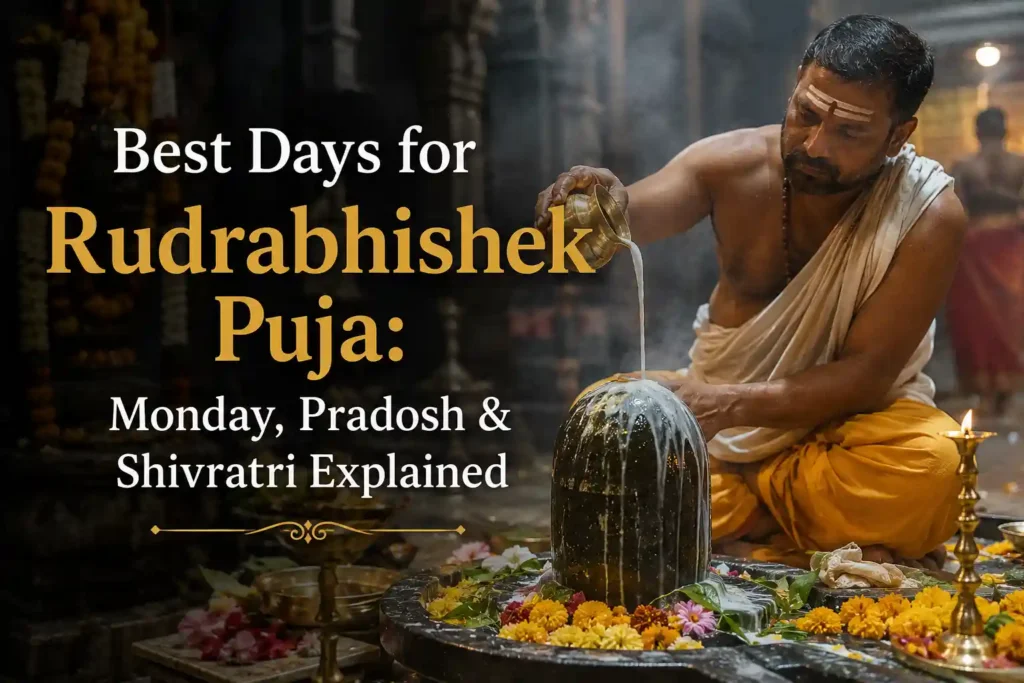
Rudrabhishek Puja is a traditional Hindu ritual dedicated to Lord Shiva, in which the Shiva Lingam is ceremonially bathed with sacred offerings while priests or devotees recite Vedic mantras. It is performed as an expression of devotion and to seek blessings for peace, well-being, prosperity, and spiritual growth.
One common question devotees have is: Which is the best day for Rudrabhishek Puja?
In Hindu tradition, Monday (Somvar) is widely considered an auspicious day for worshipping Lord Shiva. Other important occasions include Pradosh Vrat, Maha Shivratri, Shravan Mondays, and Masik Shivratri. Each has its own religious significance, and devotees may choose a suitable date according to their family traditions, personal beliefs, and guidance from a knowledgeable priest.
If you are planning to perform Rudrabhishek at Trimbakeshwar Jyotirlinga in Nashik, understanding the significance of these occasions can help you prepare for the ceremony. This guide explains the auspicious days, suitable timings, commonly used offerings, and practical details to consider before booking the puja.
What Is Rudrabhishek Puja?
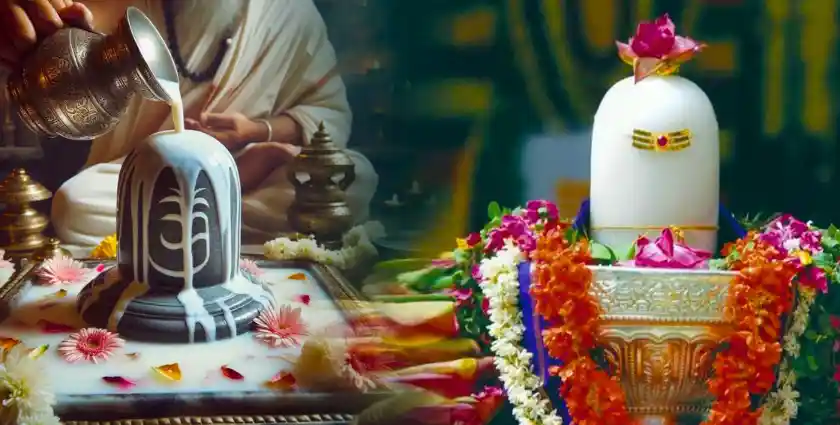
Rudrabhishek is a form of Shiva worship in which the Shiva Lingam is ceremonially bathed with offerings while sacred prayers and mantras are recited. The term Abhishek refers to ritual bathing, while Rudra is a name associated with Lord Shiva.
The ceremony may include water, milk, curd, honey, ghee, Bilva leaves, flowers, sandalwood paste, and other offerings, depending on the ritual and local tradition. In a traditional Vedic ceremony, priests may recite the Sri Rudram, a revered hymn found in the Krishna Yajurveda.
Each offering carries symbolic meaning within Hindu worship. For example, water is associated with purification, milk with purity, and Bilva leaves with devotion to Lord Shiva.
Devotees perform Rudrabhishek for various reasons, including spiritual discipline, prayers for family well-being, and important personal occasions. Some also undertake the ritual following religious or astrological guidance.
Trimbakeshwar is a significant pilgrimage destination for Shiva devotees because it is home to one of the twelve Jyotirlingas. Visitors may choose to perform Rudrabhishek there as part of their pilgrimage.
Which Is the Best Day for Rudrabhishek Puja?
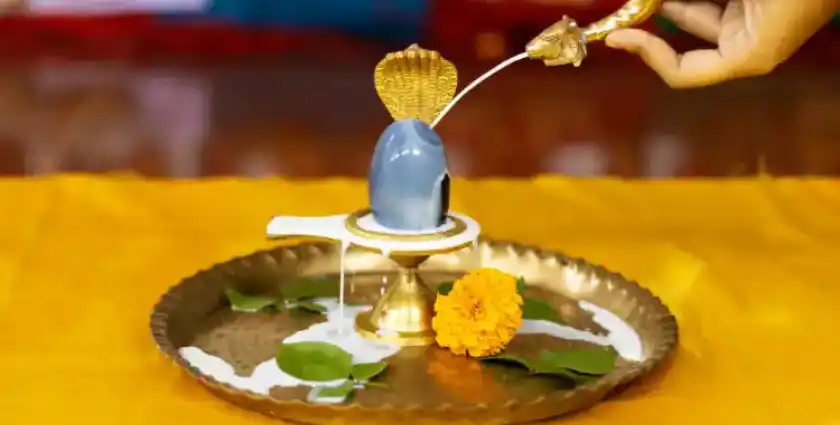
Monday (Somvar) is widely regarded as one of the most auspicious days for Rudrabhishek Puja. However, devotees can worship Lord Shiva on other days as well. Pradosh Vrat, Maha Shivratri, Shravan Mondays, and Masik Shivratri are also important occasions in Hindu tradition.
The most suitable date depends on the occasion you wish to observe, your religious customs, and the availability of the priest or temple service.
| Auspicious day | Religious significance |
|---|---|
| Monday (Somvar) | A weekly day dedicated to Lord Shiva |
| Pradosh Vrat | Worship associated with the Trayodashi lunar day, particularly during twilight |
| Maha Shivratri | Annual festival dedicated to Lord Shiva |
| Shravan Mondays | Mondays during the sacred Shravan month |
| Masik Shivratri | Monthly observance dedicated to Lord Shiva |
These occasions provide different opportunities for prayer and worship. There is no need to wait for a festival if you wish to perform Rudrabhishek on an ordinary day.
1. Monday (Somvar): A Popular Day for Rudrabhishek
Monday holds a special place in the worship of Lord Shiva. In Hindu tradition, it is associated with Somvar Vrat, temple visits, Shiva mantra chanting, and offerings to the Shiva Lingam.
Many devotees choose Monday for Rudrabhishek because it is convenient to observe weekly and provides an opportunity to maintain a regular spiritual practice.
The ceremony may include an Abhishek with water or other traditional offerings, followed by prayers and the recitation of Shiva mantras. Some devotees also observe a fast, depending on their personal beliefs and family customs.
If you are planning the puja for a specific occasion, you can ask a priest whether a particular Monday is suitable according to your preferred tradition and the Hindu calendar.
2. Pradosh Vrat: Worship During the Twilight Period
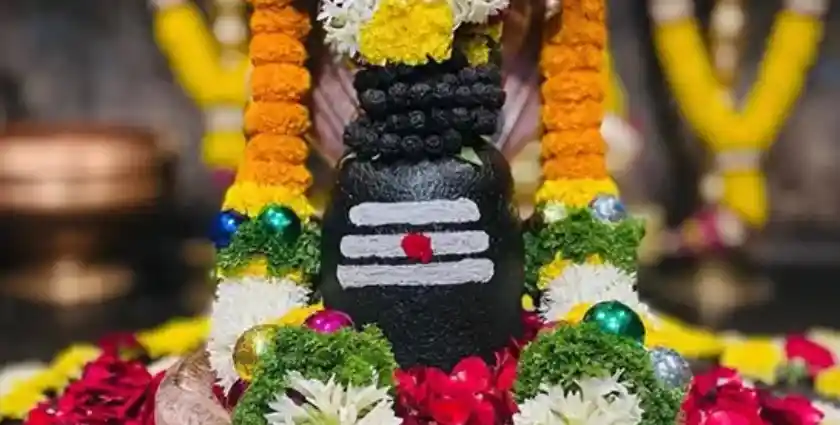
Pradosh Vrat is observed on Trayodashi, the thirteenth lunar day, during both the waxing and waning phases of the moon. The observance is closely associated with Lord Shiva and is traditionally marked by prayers and worship around twilight.
The period known as Pradosh Kaal is generally associated with the time around sunset. Its exact timing changes with the location and date, so consult a local Panchang or priest if you want to perform the ritual during this period.
Rudrabhishek performed on Pradosh Vrat may include the customary bathing of the Shiva Lingam, mantra chanting, Bilva leaf offerings, and Aarti, according to the ceremony being followed.
Devotees observe this occasion as an opportunity for prayer, spiritual reflection, and seeking Lord Shiva's blessings. If you want to combine Rudrabhishek with Pradosh Vrat, confirm the appropriate date and available puja timings before booking.
3. Maha Shivratri: An Important Annual Occasion
Maha Shivratri is one of the most significant annual festivals dedicated to Lord Shiva. It is observed on the Chaturdashi lunar day during Krishna Paksha in the Hindu month of Phalguna, although calendar conventions and regional observances can vary.
Devotees mark the occasion through fasting, prayers, mantra chanting, temple visits, and Shiva Lingam Abhishek. Some remain awake during the night and worship during the four traditional Prahars, or periods of the night.
Rudrabhishek on Maha Shivratri is especially meaningful for devotees who wish to observe this important festival through traditional Shiva worship.
Because many people visit prominent Shiva temples during this occasion, it is sensible to check temple arrangements and enquire about puja availability well in advance.
If you intend to perform the ceremony at Trimbakeshwar, confirm the date according to the local Hindu calendar and ask whether advance registration or a specific booking procedure applies.
4. Shravan Mondays: A Sacred Period for Shiva Worship
Shravan, also known as Sawan, is a month of particular religious importance for Lord Shiva in many Hindu traditions. Devotees often observe fasting, visit Shiva temples, chant mantras, and offer water to the Shiva Lingam during this period.
Mondays falling within Shravan are commonly regarded as especially auspicious. Many families make these days part of their annual religious observances.
Rudrabhishek during Shravan may involve water, milk, Bilva leaves, flowers, and other offerings prescribed by the relevant tradition. The ceremony can be performed in a temple or, where appropriate, as part of personal worship at home.
The dates of Shravan differ between regional Hindu calendars. For this reason, devotees travelling to Trimbakeshwar should check the locally followed calendar rather than relying on a date from another state.
If you are planning a pilgrimage during Shravan, arrange accommodation and confirm puja availability ahead of time, particularly if you prefer a Monday.
5. Masik Shivratri: A Monthly Occasion for Shiva Worship
Masik Shivratri is observed each month on the Krishna Paksha Chaturdashi, according to the Hindu lunar calendar. It offers devotees a recurring opportunity to worship Lord Shiva throughout the year.
The observance may include fasting, meditation, prayers, mantra chanting, and Abhishek. Some devotees prefer evening or nighttime worship as part of their customary observance.
Unlike Maha Shivratri, which is the major annual festival, Masik Shivratri occurs every lunar month. This makes it a useful occasion for people who wish to maintain a regular religious practice without waiting for the annual festival.
If you wish to perform Rudrabhishek on Masik Shivratri, confirm the correct local date and the available ceremony timings with your priest.
What Is the Best Time of Day for Rudrabhishek Puja?
Early morning is commonly preferred for Shiva worship because it provides a peaceful setting for prayer and spiritual practice. However, the appropriate time for a formal Rudrabhishek ceremony depends on the ritual, temple schedule, and religious tradition being followed.
The following periods are commonly considered for planning Shiva worship:
- Brahma Muhurat: A traditional pre-sunrise period often used for meditation and prayer.
- Early morning: A popular time for temple visits and Abhishek.
- Pradosh Kaal: The twilight period associated with Pradosh Vrat.
- Night during Maha Shivratri: Many devotees perform special prayers and Abhishek during the festival's nighttime observances.
There is no single clock time that applies to every temple or date. If a particular Muhurat is important to you, ask the priest to check the Panchang for the intended location and day.
For Rudrabhishek at Trimbakeshwar, also confirm the service provider's reporting time and whether the ceremony follows the temple's own schedule.
Who Can Perform Rudrabhishek Puja?
Rudrabhishek is practised by devotees who wish to worship Lord Shiva and seek spiritual blessings. Individuals and families may arrange the ceremony for personal devotion, festivals, religious milestones, or family observances.
Some people also consult a priest or astrologer when deciding whether to undertake a particular puja. If you have received an astrological recommendation, ask the practitioner to explain its basis and discuss the religious procedure with a knowledgeable priest.
The arrangements for performing or participating in the ritual may differ between temples and family traditions. Confirm any specific requirements with the officiating priest rather than assuming that every ceremony follows identical rules.
Rudrabhishek can be approached as a devotional practice without expecting guaranteed changes in health, finances, marriage, or career.
Materials Required for Rudrabhishek Puja
The offerings used during Rudrabhishek vary according to the ritual and the tradition followed. Common materials include the following:
| Puja material | Traditional association |
|---|---|
| Water or Gangajal | Purification and devotion |
| Milk | Purity |
| Curd | Nourishment and auspiciousness |
| Honey | Sweetness |
| Ghee | Sacred offerings and illumination |
| Sugar | Sweetness and contentment |
| Panchamrit | A traditional combination of offerings |
| Bilva leaves | Devotion to Lord Shiva |
| Flowers | Prayer and reverence |
| Sandalwood paste | Fragrance and worship |
| Fruits | Offering and gratitude |
| Incense and camphor | Traditional worship and Aarti |
| Bhasma | A symbol associated with Shiva worship |
Not every ceremony requires every item listed above. Some materials may be included in the puja arrangement, while others depend on the priest's instructions.
Before travelling, ask whether the provider supplies the materials and whether you need to bring anything yourself. Follow the temple's guidance regarding which offerings are permitted.
Traditional Significance and Benefits of Rudrabhishek
For many devotees, Rudrabhishek is a way to express gratitude, strengthen their connection with Lord Shiva, and dedicate time to prayer. The ritual combines sacred offerings with mantra recitation and other established forms of worship.
Within Hindu tradition, devotees commonly associate this ceremony with the following intentions:
- Seeking spiritual peace and divine blessings.
- Developing a regular devotional practice.
- Praying for family well-being and harmony.
- Expressing gratitude during important life events.
- Finding time for reflection and spiritual discipline.
- Observing religious occasions associated with Lord Shiva.
The meaning of these practices is personal and religious. Although some devotees associate Rudrabhishek with relief from difficulties or improved circumstances, specific outcomes cannot be guaranteed by performing the ritual.
Why Perform Rudrabhishek at Trimbakeshwar?
Trimbakeshwar, near Nashik in Maharashtra, is a revered pilgrimage destination and one of the twelve Jyotirlinga sites associated with Lord Shiva.
Devotees visit the temple throughout the year for darshan and religious observances. Some also arrange Rudrabhishek through local priests who perform Shiva worship according to their established traditions.
If you are considering a ceremony at Trimbakeshwar, check the following details before making a booking:
- The priest's experience and relevant credentials.
- The ritual procedure and expected duration.
- The available dates and reporting time.
- The total cost and materials included.
- Any separate temple entry or darshan arrangements.
- The cancellation and rescheduling policy, if applicable.
Clear information helps you plan your visit and understand precisely which services are included.
Common Mistakes to Avoid When Planning Rudrabhishek
A little preparation can help make the experience more organised and respectful of local customs.
Choosing a date without checking the calendar
Festival dates and lunar observances can vary by location. Check the relevant Panchang if you want to observe a specific occasion.
Assuming every puja is identical
The mantras, materials, duration, and ritual sequence can vary. Ask the priest what your ceremony includes.
Booking without confirming the total cost
Check the charges for the ritual, materials, and any additional services before paying.
Arriving without knowing the schedule
Confirm the reporting time and keep enough time for the ceremony.
Expecting guaranteed results
Religious worship is an expression of faith, not a guaranteed solution to personal or professional challenges.
Overlooking temple rules
Check current instructions about dress, offerings, photography, and darshan before your visit.
Frequently Asked Questions
1. Which is the best day for Rudrabhishek Puja?
Monday is widely considered an auspicious day for worshipping Lord Shiva. Pradosh Vrat, Maha Shivratri, Shravan Mondays, and Masik Shivratri are also important occasions for performing Rudrabhishek according to Hindu tradition.
2. Can Rudrabhishek be performed on any day?
Yes. Devotees can worship Lord Shiva on any day. Special occasions such as Monday and Shivratri have additional religious significance, but daily worship is also part of many Hindu traditions.
3. What is the best time for Rudrabhishek?
Early morning is a popular time for Shiva worship. Pradosh Kaal is another traditional period for worship on Pradosh Vrat, while nighttime worship is common during Maha Shivratri. The actual schedule depends on the ritual and temple.
4. Why are Bilva leaves offered to Lord Shiva?
Bilva leaves are traditionally regarded as a particularly sacred offering to Lord Shiva. Offering them during worship is an expression of devotion and is an established part of many Shiva puja traditions.
5. Can Rudrabhishek be performed for planetary doshas?
Some devotees undertake Rudrabhishek after receiving religious or astrological guidance. If you have concerns about a planetary dosha, consult a knowledgeable practitioner to understand the recommendation and its traditional basis.
6. How long does Rudrabhishek Puja take?
The duration depends on the type of ceremony, the mantras recited, and the procedure followed. Ask the officiating priest for an estimated duration before booking, particularly if you have travel arrangements.
7. Can women participate in Rudrabhishek?
Participation depends on the arrangements and customs followed by the temple or family tradition. Confirm any specific rules with the priest or temple before attending.
8. Which temple is known for Rudrabhishek?
Trimbakeshwar Jyotirlinga in Maharashtra is a well-known pilgrimage destination for Lord Shiva worship. Devotees visit to seek darshan and enquire about religious ceremonies offered by local priests.
9. What should I wear for Rudrabhishek?
Clean, modest clothing is generally appropriate for temple worship. Specific dress requirements may vary, so check the guidance provided by the temple or priest.
10. Can Rudrabhishek be performed for family well-being?
Many families perform Rudrabhishek as a devotional act and pray for peace, harmony, and well-being. The ceremony can hold personal and spiritual significance, although specific outcomes are not guaranteed.
11. Should I book Rudrabhishek in advance at Trimbakeshwar?
Advance booking is helpful if you want a particular date, especially during busy festivals or Shravan Mondays. Confirm availability, charges, timing, and included services directly with the provider.
12. Is a special Muhurat compulsory for Rudrabhishek?
A particular Muhurat is not necessary for every form of Shiva worship. However, if you want to follow a specific astrological or traditional timing, consult a priest who can check the relevant Panchang.
Conclusion
The best day for Rudrabhishek Puja depends on your religious observance, personal preferences, and the tradition you follow. Monday is a popular choice for regular Shiva worship, while Pradosh Vrat, Maha Shivratri, Shravan Mondays, and Masik Shivratri offer additional occasions for prayer.
Early morning is commonly preferred for the ceremony, although the appropriate timing varies with the ritual and temple arrangements. If you plan to perform Rudrabhishek at Trimbakeshwar, confirm the date, procedure, materials, and total charges before booking.
With thoughtful preparation and an understanding of the traditional practices involved, you can plan a meaningful act of devotion to Lord Shiva.
Book Rudrabhishek Puja