
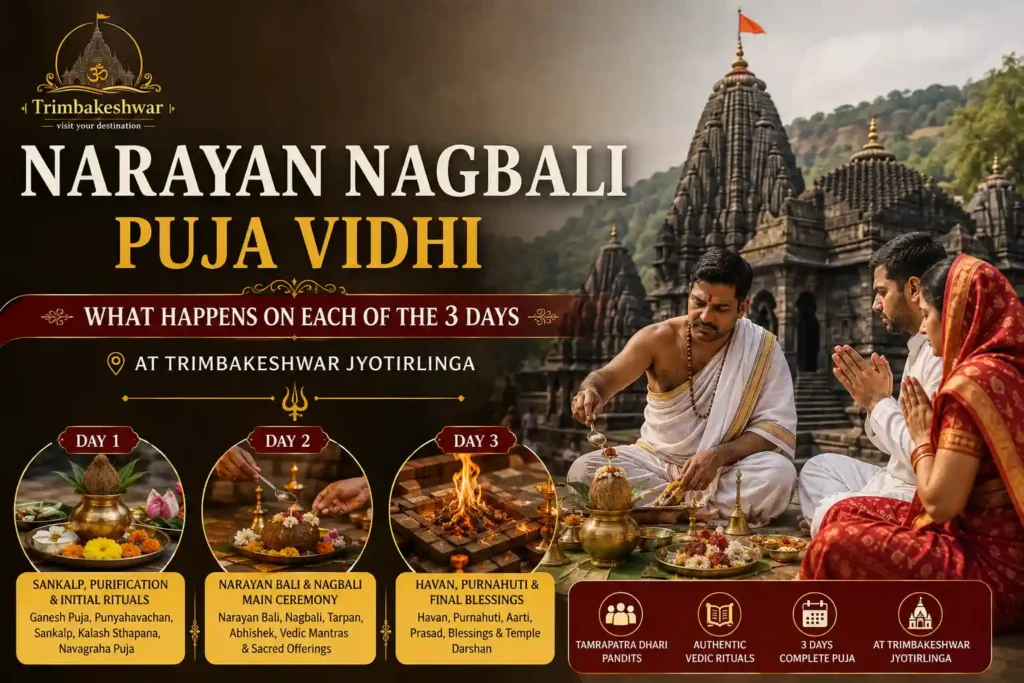
Narayan Nagbali Puja is an important Hindu religious ceremony traditionally performed at Trimbakeshwar in Nashik, Maharashtra. The ritual combines Narayan Bali and Nagbali, two distinct ceremonies associated with specific beliefs and practices in Hindu traditions. Devotees undertake these rituals according to family customs, religious beliefs, or guidance from knowledgeable priests.
One of the most common questions devotees ask before visiting Trimbakeshwar is how the three-day ceremony is performed. Understanding the general procedure can help you plan your journey, prepare the necessary items, and know what to expect during the rituals.
The ceremony involves several stages, including Sankalp, prayers, prescribed offerings, Vedic chanting, and concluding rituals. The exact sequence may vary according to the tradition followed by the officiating priest.
In this guide, you will learn about the purpose of Narayan Nagbali Puja, the general activities associated with each day, preparations before arrival, and important points to consider when booking the ceremony.
What Is Narayan Nagbali Puja?
Narayan Nagbali Puja combines two traditional Hindu rituals: Narayan Bali and Nagbali. Both are performed according to established religious customs, although their specific procedures and interpretations differ.
Narayan Bali is traditionally associated with religious rites for departed souls and certain ancestral beliefs. Nagbali is associated with a separate ritual involving a symbolic representation of a serpent and religious observances connected with beliefs about harm to serpents.
Devotees may seek guidance about these ceremonies from a priest based on family traditions, personal religious beliefs, or an astrological consultation.
Trimbakeshwar is a significant pilgrimage destination because it houses one of the twelve Jyotirlingas of Lord Shiva. The town is widely known for various religious ceremonies, including rituals associated with ancestral observances.
Since these ceremonies involve specific customs, devotees should consult an experienced priest to understand the appropriate procedure and whether the ritual aligns with their religious requirements.
Why Is Narayan Nagbali Puja Traditionally Performed Over Three Days?
The ceremony is commonly arranged over three consecutive days because it involves multiple stages of preparation, principal rituals, and concluding observances.
Rather than treating it as a single prayer session, the traditional format allows the priest to conduct the prescribed ceremonies in their intended sequence.
The general arrangement is as follows:
- Day 1: Initial preparations, Sankalp, purification, and preliminary rituals.
- Day 2: Principal Narayan Bali and Nagbali ceremonies, according to the tradition followed.
- Day 3: Concluding prayers, Havan or other prescribed rituals, and completion observances.
The precise schedule, ritual names, and timing can differ between priests and traditions. Confirm the complete procedure with the officiating pandit before finalising your travel plans.
Preparations Before the First Day
Planning ahead is particularly important because devotees generally need to remain available throughout the three-day ceremony.
Before travelling to Trimbakeshwar, confirm your booking and ask the priest about reporting time, accommodation, dress requirements, and any instructions that must be followed before the ritual begins.
Preparation checklist
- Confirm the puja date and reporting time with your priest.
- Arrange accommodation for the required duration.
- Plan your journey and local transportation in advance.
- Carry valid identification and personal essentials.
- Pack clean, traditional clothing suitable for the ceremony.
- Ask whether any fasting or dietary restrictions apply.
- Confirm which puja materials are included in the booking.
- Keep your schedule flexible for all three days.
- Follow the instructions provided by the officiating priest.
If you are travelling from another city, arriving the previous day can provide additional time to settle in and prepare. During busy pilgrimage periods, advance accommodation arrangements may be particularly helpful.
Day 1: Sankalp, Purification and Preliminary Rituals
The first day generally focuses on preparing the devotee and beginning the ceremony according to the customs followed by the priest.
The process may begin with prayers to Lord Ganesha, followed by purification rites and Sankalp. Sankalp is a formal declaration of intention made at the beginning of a religious ceremony. The priest may ask for the devotee's name, Gotra if known, and other relevant details.
Preliminary rituals may also include the establishment of a Kalash, invocations, and other prescribed prayers. These activities depend on the particular procedure being followed.
During this stage, the priest explains the necessary observances and guides the devotee through the appropriate steps. Some parts of the ceremony involve listening to mantras, offering prayers, or following specific instructions.
For first-time visitors, it is helpful to ask questions before the ceremony starts. Understanding the schedule and the role expected of you can make the experience more organised and comfortable.
The purpose of the first day is to establish the foundation for the principal rituals that follow.
Day 2: Narayan Bali and Nagbali Rituals
The second day generally centres on the two principal ceremonies that give Narayan Nagbali Puja its name.
Narayan Bali
Narayan Bali is a traditional Hindu ritual associated with religious observances for departed souls. It involves prescribed offerings, prayers, and other rites performed according to the priest's tradition.
The officiating pandit guides the devotee through the procedure and explains the significance of the relevant observances where appropriate.
Nagbali
Nagbali is a separate ritual traditionally associated with serpent-related religious beliefs. Its procedure differs from Narayan Bali and follows its own prescribed customs.
The priest performs the relevant rites and guides the devotee through the steps required for participation.
Depending on the tradition, the day's proceedings may also include chanting, offerings, and other prescribed observances.
Because these rituals are specific to the religious tradition being followed, the exact sequence should be confirmed directly with the priest. Devotees should not assume that every service provider performs an identical procedure.
For families undertaking the ceremony for the first time, discussing the arrangements beforehand can help clarify the expected duration, participation requirements, and any practical considerations.
Day 3: Havan, Concluding Rituals and Blessings
The third day generally brings the ceremony to its conclusion through the final rituals prescribed by the officiating priest.
Where included in the procedure, Havan involves offerings into a sacred fire accompanied by Vedic chanting. The ceremony may conclude with Purnahuti, which represents the final offering in the fire ritual.
Additional concluding observances may include prayers, Aarti, blessings, and the distribution of Prasad, depending on the tradition followed.
Some families also undertake charitable activities, such as providing food to others, as part of their religious observances. Ask the priest whether such activities are included in your arrangements or need to be organised separately.
After completing the scheduled rituals, devotees may visit Trimbakeshwar Jyotirlinga for darshan, subject to temple access and timings.
Before leaving, confirm with the priest that all the rituals included in your booking have been completed and ask whether any further instructions apply.
Narayan Nagbali Puja: Three-Day Schedule at a Glance
| Day | General activities | Main focus |
|---|---|---|
| Day 1 | Sankalp, prayers, purification, preliminary rituals | Preparation and commencement |
| Day 2 | Narayan Bali and Nagbali ceremonies | Principal religious observances |
| Day 3 | Havan, Purnahuti, concluding prayers, where prescribed | Completion of the ceremony |
This is a general overview rather than a fixed ritual manual. The actual schedule and individual rites should be confirmed with your officiating pandit.
Who Should Consider Narayan Nagbali Puja?
People may consider this ceremony for different reasons, depending on their family traditions, religious beliefs, and guidance from a priest or astrologer.
Some devotees enquire about the ritual as part of ancestral religious observances, while others seek clarification after receiving an astrological recommendation.
However, not everyone who experiences personal, family, or professional difficulties necessarily needs to perform a particular religious ceremony. If you have been advised to undertake this puja, ask the priest to explain the traditional reasoning, the prescribed procedure, and the expected commitments before deciding.
A clear discussion can help you make an informed choice without feeling pressured by fear or promises of guaranteed results.
Important Things to Know Before Visiting Trimbakeshwar
A little planning can make your pilgrimage more comfortable, especially when the ceremony requires three days.
Accommodation
Reserve a suitable place to stay before travelling. Availability may be more limited during major festivals and busy pilgrimage periods.
Travel arrangements
Plan your arrival, local transportation, and return journey with sufficient flexibility.
Clothing
Ask the priest about appropriate attire and any specific dress requirements.
Puja materials
Confirm whether the service provider supplies all the necessary items or expects you to bring anything.
Temple darshan
Check current temple timings and entry arrangements separately, as darshan may not automatically be included in your puja booking.
Personal instructions
Ask about any fasting, dietary observances, or other customs before the first day.
Booking and payment
Request a clear breakdown of the charges, including the rituals, materials, and any additional services.
Confirming these details in advance helps avoid confusion when you arrive.
Book Narayan Nagbali Puja at Trimbakeshwar
If you are planning to perform the ceremony at Trimbakeshwar, contact an experienced Tamrapatradhari Pandit to discuss the procedure, available dates, and booking requirements.
Advance planning is particularly useful if you need to coordinate travel and accommodation for three consecutive days. Before confirming a date, make sure you understand what is included in the service and whether any additional charges apply.
Our Services
- Narayan Nagbali Puja arrangements with Tamrapatradhari Pandits.
- Guidance about traditional Vedic rituals.
- Puja material arrangements, as confirmed during booking.
- Assistance with online enquiries and reservations.
- Guidance in Hindi, Marathi, and English, subject to availability.
- Information about Trimbakeshwar Temple darshan and local arrangements.
- Assistance with planning the ceremony for families.
Contact the service provider to verify availability, the exact ritual schedule, total charges, and the services included in your booking.
Frequently Asked Questions
1. What is Narayan Nagbali Puja?
Narayan Nagbali Puja combines two traditional Hindu rituals, Narayan Bali and Nagbali. The ceremonies follow prescribed religious customs and are commonly associated with ancestral observances and serpent-related beliefs. Devotees generally consult a knowledgeable priest to understand the procedure and its significance.
2. Why does Narayan Nagbali Puja take three days?
The ceremony is traditionally arranged over three days to accommodate its preliminary rites, principal ceremonies, and concluding observances. The actual sequence and duration depend on the tradition followed by the officiating priest.
3. Can Narayan Nagbali Puja be completed in one day?
The commonly followed procedure at Trimbakeshwar is arranged over three consecutive days. Ask your priest about the traditional schedule before making travel arrangements, rather than assuming a shortened ceremony follows the same procedure.
4. Where is Narayan Nagbali Puja performed?
Trimbakeshwar, near Nashik in Maharashtra, is a well-known destination for this ceremony. It is also an important pilgrimage site associated with Lord Shiva and one of the twelve Jyotirlingas.
5. What should I bring for the puja?
Carry identification, traditional clothing, personal essentials, and anything specifically requested by the priest. Confirm whether the puja materials are included in your booking so you can prepare accordingly.
6. Is advance booking necessary?
Advance booking is advisable because you need to coordinate the ceremony date, travel, and accommodation. Availability varies, so confirm the schedule directly with the priest, particularly during busy pilgrimage periods.
7. Who performs the ceremony?
The ritual is conducted by priests familiar with the relevant traditional procedures. If you are looking for a Tamrapatradhari Pandit, ask to verify the priest's credentials and experience before booking.
8. What is the best time to perform Narayan Nagbali Puja?
The appropriate date depends on the tradition followed and any guidance received from a knowledgeable priest or astrologer. Ask about available dates and confirm the schedule before arranging your journey.
9. Can the entire family participate?
Family participation may be possible, depending on the ritual and the priest's arrangements. Confirm who can participate, what their role will be, and whether any additional arrangements are required.
10. How should I prepare for the three-day ceremony?
Confirm the date and reporting time, arrange accommodation, carry suitable clothing, and follow the instructions provided by the priest. Keep all three days available so you can complete the scheduled ceremonies without travel conflicts.
11. Are all puja materials included in the booking?
Not necessarily. Some providers include the required materials in their quoted price, while others may charge separately. Ask for a complete list of inclusions before making payment.
12. Is Narayan Nagbali Puja guaranteed to resolve personal problems?
No specific outcome can be guaranteed. People undertake religious ceremonies according to their faith and traditions, but the ritual should not be treated as a guaranteed solution to health, financial, relationship, or other personal difficulties.
Conclusion
Narayan Nagbali Puja is a traditional religious ceremony that brings together Narayan Bali and Nagbali, generally performed over three days at Trimbakeshwar. Knowing the broad sequence of the rituals, the preparations required, and the arrangements to confirm beforehand can help you plan your pilgrimage with greater confidence.
The first day usually focuses on preliminary rites and Sankalp, the second on the principal ceremonies, and the third on concluding observances. The exact procedure may vary, so it is important to follow the guidance of the officiating priest.
If you are planning a visit, confirm the date, complete cost, puja materials, accommodation requirements, and ritual schedule before booking. With clear information and thoughtful preparation, you can approach the ceremony in a way that respects your beliefs and traditional practices.
Book Narayan Nagbali Puja