
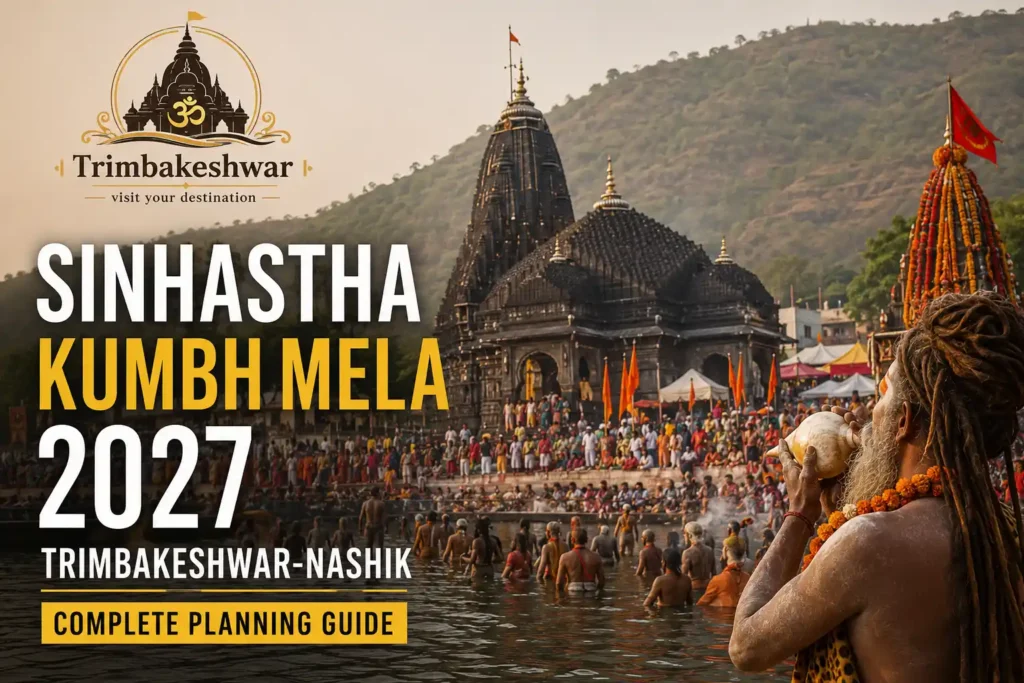
The Sinhastha Kumbh Mela 2027 in Nashik and Trimbakeshwar, Maharashtra, is an important Hindu pilgrimage gathering that brings together devotees, saints, sadhus, and visitors from across India and beyond. Associated with the sacred Godavari River and the Trimbakeshwar Jyotirlinga Temple, this traditional festival offers an opportunity to experience Hindu religious practices, spiritual discourses, ceremonial processions, and holy bathing rituals.
Trimbakeshwar holds a special place in the Kumbh Mela because of its ancient Shiva temple and the sacred Kushavarta Kund, traditionally regarded as the symbolic origin of the Godavari River. Nashik also plays a central role, with important pilgrimage locations and bathing ghats attracting devotees during the festival.
If you are planning to attend the Nashik–Trimbakeshwar Kumbh Mela 2027, preparing in advance can make your visit more comfortable. Travel routes, accommodation, temple access, and crowd-management arrangements may change during the event, particularly on major bathing days.
This guide explains the significance of Sinhastha Kumbh Mela, its traditions, how to reach Nashik and Trimbakeshwar, where to stay, temple darshan tips, and practical advice for planning your pilgrimage.
What Is Sinhastha Kumbh Mela?
Sinhastha Kumbh Mela is a major Hindu religious gathering traditionally held at Nashik and Trimbakeshwar approximately every twelve years. Its timing is associated with specific planetary positions described in Hindu astrological traditions, particularly the connection between Jupiter and the zodiac sign Leo, or Simha.
The festival is associated with the ancient story of Samudra Manthan, the churning of the cosmic ocean to obtain Amrit, the nectar of immortality. According to Hindu tradition, drops of Amrit fell at four sacred locations: Prayagraj, Haridwar, Ujjain, and Nashik–Trimbakeshwar.
During Kumbh Mela, pilgrims gather to participate in holy bathing rituals, visit temples, attend religious discourses, and seek blessings. Many devotees regard the sacred bath as an expression of faith, devotion, and spiritual renewal.
Beyond its religious significance, the festival is also an opportunity to experience India's diverse spiritual traditions, devotional music, cultural practices, and centuries-old pilgrimage customs.
History and Religious Significance of Nashik Kumbh Mela
Nashik–Trimbakeshwar has long been an important centre of Hindu pilgrimage. The region's connection with Lord Shiva, the Godavari River, and traditional religious practices gives the Sinhastha Kumbh Mela a distinctive identity.
The name Sinhastha is associated with the astrological significance of Simha, meaning Leo. According to traditional beliefs, the relevant planetary alignment determines the timing of the Kumbh gathering at Nashik and Trimbakeshwar.
The festival brings together different spiritual traditions and monastic groups. Devotees visit sacred bathing locations, offer prayers, listen to religious teachings, and take part in ceremonies conducted according to established customs.
The previous Nashik–Trimbakeshwar Simhastha Kumbh Mela was held in 2015–2016. The forthcoming gathering in 2027 is expected to require extensive arrangements for pilgrims, including transport, sanitation, public safety, and visitor facilities. For current administrative information, consult the official Nashik–Trimbakeshwar Kumbh Mela Authority.
The Mythological Story Behind Kumbh Mela
The traditional story of Kumbh Mela begins with Samudra Manthan, or the churning of the cosmic ocean. According to Hindu mythology, the Devas and Asuras worked together to obtain Amrit, the nectar of immortality.
When the nectar emerged, a struggle followed over its possession. Hindu traditions associate four sacred pilgrimage sites with drops of Amrit: Prayagraj, Haridwar, Ujjain, and Nashik–Trimbakeshwar.
These locations became associated with Kumbh Mela, which is celebrated according to different traditional astrological calculations.
For devotees, participating in the festival is an expression of religious faith and a way to reconnect with sacred traditions. The mythology remains an important part of the festival's spiritual meaning and continues to inspire pilgrims from different parts of the country.
Why Is Trimbakeshwar Important During Kumbh Mela?
Trimbakeshwar is one of India's most significant Shiva pilgrimage destinations because it is home to the Trimbakeshwar Jyotirlinga Temple, one of the twelve traditionally recognised Jyotirlingas of Lord Shiva.
During the Sinhastha Kumbh Mela, devotees visit the town to offer prayers, seek blessings, and experience its religious atmosphere. The temple and nearby sacred sites form an important part of the pilgrimage experience.
Trimbakeshwar is also known for traditional Hindu rituals performed by priests, including Rudrabhishek, Narayan Nagbali Puja, Kaal Sarp Dosh Puja, Tripindi Shradh, and Mahamrityunjaya Jaap. Some visitors may wish to combine a temple visit with a separate religious ceremony.
If you are considering a puja during your trip, contact the priest or service provider in advance to confirm availability, the ritual procedure, duration, and charges. Temple entry and puja arrangements may be subject to local rules and event-specific restrictions.
Kushavarta Kund: A Sacred Pilgrimage Site
Kushavarta Kund is one of the most revered religious sites in Trimbakeshwar. According to Hindu tradition, the kund is regarded as the symbolic origin of the Godavari River and has a long-standing association with ritual bathing and prayer.
Pilgrims often visit Kushavarta Kund as part of their spiritual journey through Trimbakeshwar. During the Kumbh Mela, the area may attract particularly large crowds for bathing rituals and other religious activities.
If you plan to visit, follow the instructions of local authorities and volunteers. Use only designated access points, respect any bathing restrictions, and avoid entering the water when officials have closed the area for safety or crowd management.
Keep the surroundings clean and respect the religious practices of other visitors.
Shahi Snan and Sacred Bathing Rituals
The ceremonial bath associated with Kumbh Mela is one of the festival's most important traditions. The term Shahi Snan is widely used for the ceremonial bathing associated with the Akharas and their processions; official terminology and event schedules may vary.
On designated bathing days, members of participating Akharas may proceed towards bathing areas in organised processions. These can include religious flags, traditional music, chanting, and the presence of saints and ascetics.
For many devotees, witnessing these processions is an important part of the pilgrimage. Others attend to participate in bathing rituals at designated locations, subject to the arrangements announced by the authorities.
What to Know Before a Major Bathing Day
- Check the official bathing schedule before travelling.
- Confirm which bathing locations are open to the public.
- Follow announced entry routes, traffic diversions, and restricted zones.
- Allow extra time for walking, queues, and security checks.
- Do not enter closed bathing areas or push through crowded routes.
- Choose a meeting point with family members in case you become separated.
- Follow instructions from police, volunteers, and event officials.
Do not rely on an unverified date or an old festival calendar when planning your journey.
Akharas and Naga Sadhus
Akharas are traditional religious and monastic organisations associated with different Hindu spiritual lineages. They play a prominent role in the religious life of Kumbh Mela and may participate in ceremonial processions, bathing rituals, and spiritual gatherings.
Naga Sadhus are among the most recognisable ascetics associated with these traditions. Their distinctive appearance and practices often attract the attention of pilgrims and visitors.
If you encounter saints or ascetics during the festival, approach them respectfully. Always ask permission before taking close-up photographs, and follow any restrictions announced by the organisers. Some religious activities are private or intended only for participants.
How to Reach Trimbakeshwar and Nashik
Nashik is the principal travel hub for pilgrims visiting Trimbakeshwar. From Nashik, visitors can continue to Trimbakeshwar by road, depending on the transport arrangements in effect during the festival.
By Air
Nashik Airport may be an option depending on the available flight routes and schedules. Travellers arriving from cities with more extensive domestic or international connections can also consider Mumbai Airport and continue their journey by road or rail.
Check current flight schedules before booking, and allow additional travel time during the Kumbh period.
By Train
Nashik Road Railway Station is an important rail connection for visitors to Nashik. From the station, travellers can continue by taxi, bus, or other available transport towards Nashik city or Trimbakeshwar.
Special trains or additional services may be announced for periods of high demand. Confirm train availability and station arrangements through official railway channels.
By Road
Nashik and Trimbakeshwar are connected by road. Visitors can usually travel by bus, taxi, or private vehicle, although services, parking locations, and permitted routes may change during the festival.
Follow official traffic advisories rather than assuming that your usual route will remain open.
Approximate Distances
| Starting point | Approximate road distance |
|---|---|
| Nashik city | 30 km |
| Mumbai | 170–180 km |
| Pune | 230–250 km |
| Shirdi | 110–130 km |
Distances are indicative and vary according to the starting point and selected route. Travel time can increase considerably during major bathing days and traffic restrictions.
Where to Stay During Kumbh Mela 2027
Accommodation is an important part of pilgrimage planning. Hotels, guesthouses, dharamshalas, and temporary camps in Nashik and Trimbakeshwar may experience high demand during major festival periods.
The right place to stay depends on your budget, mobility, travel dates, and whether your main priority is temple darshan or attending events in Nashik.
Accommodation Options
Dharamshalas and Religious Guesthouses
These may suit pilgrims looking for simple accommodation. Confirm availability, facilities, booking requirements, and any rules for families or groups.
Budget Hotels and Lodges
These can be suitable for short stays, but facilities and prices vary. Check recent reviews and the exact location before paying.
Mid-Range and Premium Hotels
Travellers who need private rooms, additional amenities, or more predictable facilities may prefer established hotels. Rates can rise during periods of high demand.
Temporary Camps and Designated Pilgrim Accommodation
Government or authorised temporary facilities may be provided depending on the official arrangements. Check current announcements before relying on a camp being available.
Accommodation Booking Tips
- Book early once your travel dates are reasonably certain.
- Check whether the property is in Nashik or Trimbakeshwar; they are separate locations.
- Confirm the distance from your intended pilgrimage sites.
- Ask about transport access, parking, meal facilities, and check-in times.
- Read cancellation and refund terms carefully.
- Verify that the booking provider and payment details are genuine.
- Reconfirm your reservation shortly before departure.
Avoid relying on fixed accommodation price estimates published long before the event. Actual rates and availability will depend on dates, location, demand, and the facilities offered.
Trimbakeshwar Temple Darshan Guide
Visiting the Trimbakeshwar Jyotirlinga Temple may be one of the main reasons for your journey. During Kumbh Mela, however, access arrangements and waiting times may differ from normal days.
Before setting out, check current temple notices and any official instructions relating to darshan timings, queues, entry routes, security, and permitted belongings.
Tips for Temple Darshan
- Check current darshan timings through official temple information channels.
- Leave sufficient time for queues and security checks.
- Carry a valid identification document if required.
- Wear comfortable, modest clothing suitable for a religious site.
- Carry only essential belongings.
- Follow instructions from temple staff and security personnel.
- Keep drinking water and any necessary personal medication accessible.
- Do not assume that special entry or ritual arrangements will be available without confirmation.
Arriving early may be helpful on some days, but it does not guarantee a short queue. Follow the latest local instructions when planning your visit.
Can You Perform Puja During Kumbh Mela?
Some pilgrims wish to combine their visit with a traditional Hindu ceremony. Depending on their religious preferences, they may enquire about Rudrabhishek, Narayan Nagbali Puja, Kaal Sarp Dosh Puja, Tripindi Shradh, or Mahamrityunjaya Jaap.
If you intend to arrange a ritual, contact the relevant priest or service provider in advance. Confirm the ceremony's purpose, procedure, expected duration, required materials, total charges, and availability on your preferred date.
Do not assume that every puja can be performed at the main temple or at a particular time during the Kumbh Mela. Access to specific locations and ritual arrangements may be affected by temple rules and crowd-management measures.
Religious ceremonies are matters of faith. Discuss the traditional meaning of a ritual with a knowledgeable priest and make an informed decision that suits your beliefs and circumstances.
Essential Things to Carry for Kumbh Mela
A well-prepared travel bag can make a busy pilgrimage easier. Choose lightweight items that you can comfortably carry while walking and waiting in queues.
Pilgrimage Packing Checklist
- Government-issued photo identification
- Mobile phone and charger
- Fully charged power bank
- Drinking water, where permitted
- Comfortable walking footwear
- Weather-appropriate clothing
- Umbrella or rain protection if needed
- Personal medicines and a small first-aid kit
- Tissues and hand sanitiser
- Cash and a secure digital payment option
- Accommodation and travel confirmations
- Emergency contact details written on paper
- An extra change of clothes if you plan to participate in bathing rituals
Keep valuables secure, and check restrictions on bags, electronics, and other belongings before entering temples or designated event areas.
Safety Tips for Families and Senior Citizens
Large religious gatherings require extra care, especially when travelling with children, older adults, or people who have difficulty walking for long periods.
Plan a Meeting Point
Choose a recognisable location in advance in case your group becomes separated. Make sure everyone knows how to contact one another.
Keep Emergency Details Accessible
Save important phone numbers and carry written contact information. Do not rely entirely on mobile connectivity in crowded areas.
Avoid Overcrowded Routes
Follow crowd-control instructions and never push against the movement of a crowd. If an area becomes uncomfortable, move away calmly when directed.
Take Regular Breaks
Walking and standing for long periods can be tiring. Plan rest stops and keep necessary medication available.
Use Authorised Transport
Follow official pick-up, drop-off, and parking arrangements. Avoid unverified transport offers and accommodation deals.
Protect Children
Keep children close in crowds and agree on what they should do if separated from their group.
Follow Health and Hygiene Advice
Use designated toilets, drink safe water, and seek medical assistance if someone feels unwell.
Sample Three-Day Nashik–Trimbakeshwar Itinerary
A three-day visit can provide time for temple darshan, local sightseeing, and selected religious activities. This is a flexible example, not an official festival schedule. You may need to extend your stay if your travel coincides with a major bathing day.
Day 1: Arrive and Visit Trimbakeshwar
- Arrive in Nashik and continue to your accommodation.
- Check current temple access arrangements.
- Visit the Trimbakeshwar Jyotirlinga Temple if time and access permit.
- Explore nearby areas where public access is allowed.
- Rest and prepare for the next day's activities.
Day 2: Sacred Sites and Kumbh Activities
- Visit Kushavarta Kund if it is open to visitors.
- Attend a scheduled religious event or bathing ritual if permitted.
- Explore spiritual discourses or public devotional programmes.
- Allow extra time for queues and transport.
- Return to your accommodation according to local travel guidance.
Day 3: Explore Nashik and Depart
- Visit an accessible religious or cultural site in Nashik.
- Purchase permitted souvenirs or prasad.
- Check your departure arrangements and traffic advisories.
- Leave extra time to reach the railway station, airport, or bus terminal.
If witnessing a major bathing ceremony is your primary goal, plan your itinerary around the confirmed official schedule rather than booking a rigid sightseeing programme.
Frequently Asked Questions About Sinhastha Kumbh Mela 2027
1. When will Sinhastha Kumbh Mela 2027 take place?
The festival is associated with the 2027 Nashik–Trimbakeshwar gathering. Check the latest announcements from the Nashik–Trimbakeshwar Kumbh Mela Authority for confirmed bathing dates, event schedules, and visitor instructions before booking your trip.
2. Where is Kumbh Mela held in Nashik?
The Sinhastha Kumbh Mela is associated with both Nashik and Trimbakeshwar in Maharashtra. Important pilgrimage locations include bathing areas along the Godavari River, religious sites in Nashik, Kushavarta Kund, and the Trimbakeshwar Jyotirlinga Temple. Specific access arrangements may vary during the festival.
3. What is the significance of Shahi Snan?
Shahi Snan refers to ceremonial bathing associated with the Akharas and saints during Kumbh Mela. Devotees regard the bathing rituals as an expression of religious faith and spiritual devotion. The timing, location, and public access arrangements should be checked through official announcements.
4. How many days should I plan for Kumbh Mela?
Three to four days can be a useful starting point for temple visits, selected festival activities, and local sightseeing. Consider staying longer if you are travelling on a major bathing day or if you need to coordinate multiple locations and religious ceremonies.
5. Should I book accommodation in advance?
Yes. Advance booking is advisable because accommodation may be in high demand during the festival. Check the property's location, cancellation policy, facilities, and booking authenticity before making payment.
6. Can senior citizens attend Kumbh Mela?
Senior citizens can plan a visit, but comfort depends on mobility, crowd conditions, weather, and access arrangements. Choose suitable accommodation, avoid unnecessarily long walking routes, carry prescribed medication, and follow official advice about crowded areas.
7. Is photography allowed during Kumbh Mela?
Photography rules can vary by location and event. Public areas may have different rules from temple premises or private religious ceremonies. Follow signs and instructions, and obtain permission before photographing individuals or restricted activities.
8. What should I wear to Trimbakeshwar Temple?
Choose modest, comfortable clothing suitable for a religious site and extended walking. If you plan to participate in bathing rituals, carry an extra change of clothes and check the rules for the relevant bathing location.
9. How can I travel from Nashik to Trimbakeshwar?
Trimbakeshwar is approximately 30 km from Nashik city by road, depending on the starting point and route. Buses, taxis, and other transport options may be available, but festival traffic and official restrictions can affect journey times and access.
10. Can I arrange a puja during Kumbh Mela?
You may enquire about traditional pujas such as Rudrabhishek, Narayan Nagbali, Kaal Sarp Dosh Puja, Tripindi Shradh, and Mahamrityunjaya Jaap. Confirm availability, the procedure, charges, and applicable temple or local restrictions directly with the relevant priest or service provider.
Conclusion
The Sinhastha Kumbh Mela 2027 offers pilgrims an opportunity to experience the religious traditions of Nashik and Trimbakeshwar, from the sacred Godavari River and Kushavarta Kund to the revered Trimbakeshwar Jyotirlinga Temple and ceremonial gatherings of saints.
A comfortable pilgrimage begins with reliable information and realistic planning. Check official announcements, arrange accommodation early, confirm temple access, prepare for crowded public areas, and leave flexibility in your travel schedule.
Whether you are visiting for holy bathing rituals, temple darshan, cultural exploration, or traditional puja, respecting local customs and following official safety instructions can help you make your journey more organised and meaningful.
May your pilgrimage to Nashik and Trimbakeshwar be peaceful, safe, and memorable.
Important travel note: Event dates, bathing schedules, road restrictions, transport services, and access arrangements may change. Verify the latest information through the official Nashik–Trimbakeshwar Kumbh Mela Authority before travelling.